In a nutshell
- 🔥 Foil accelerates heat transfer via direct conduction and steam trapping, cutting many weeknight cooks nearly in half without sacrificing texture.
- 🥘 Smart tactics: build tight foil packets for fish and veg, preheat lined trays for instant sizzle, then uncover to crisp and brown fast.
- ⚙️ Versatile across ovens and air fryers: use perforated or partial wraps to protect moisture while preserving airflow for crunch.
- ✅ Safety and control: avoid high-heat contact with very acidic foods, never microwave foil, and verify doneness (e.g., poultry 75°C, fish 63°C).
- 🌍 Time and cleanup wins: lift-and-bin liners slash washing up; clean foil is widely recyclable, helping offset energy by shorter, cooler cooks.
Pressed for time yet hungry for better results? In British home kitchens, a humble roll of aluminium foil is quietly reshaping weeknight cooking. It cuts wait times, lowers washing up, and protects delicate textures. The trick is not magic, it’s management of heat and moisture. Foil creates contact, traps steam, and guides energy where you want it. From sheet-pan suppers to packet-cooked fish, it helps meals race to doneness without sacrificing flavour. Used smartly, it even lets the oven run cooler. Below you’ll find the science, the techniques, and the safety notes that turn a simple sheet into a serious time-saver.
Why Aluminium Foil Accelerates Heat
When you press food against a foil-lined hot tray, you boost conduction—the direct transfer of energy—so ingredients warm faster than they would on bare, uneven metal. A lined tray preheated while the oven warms gives you an instant sizzle on contact, shrinking the slow ramp from fridge-cold to cooking-hot. More contact equals faster heat flow, which equals shorter cooking windows. In practice, that means chips crisp sooner, chicken thighs render quicker, and root veg lose their raw edge promptly.
Sealed foil packets transform the oven into a mini-steamer. Steam carries heat efficiently, lifting the effective cooking temperature around the food and softening fibres at speed. Fish fillets, prawns, and tender veg race to flaky, vibrant doneness. Tenting—loosely covering a joint or tray—also drives internal cooking while shielding the surface from harsh radiant heat, so you push the centre to target temperature without over-browning.
Foil also lets you choreograph heat. Cover early to accelerate interiors; uncover late to brown. In fan ovens and air fryers, a partial foil wrap minimises drying while keeping airflow where you need crispness. The result is control: faster cooking with outcomes you can predict.
Practical Techniques That Halve Weeknight Timings
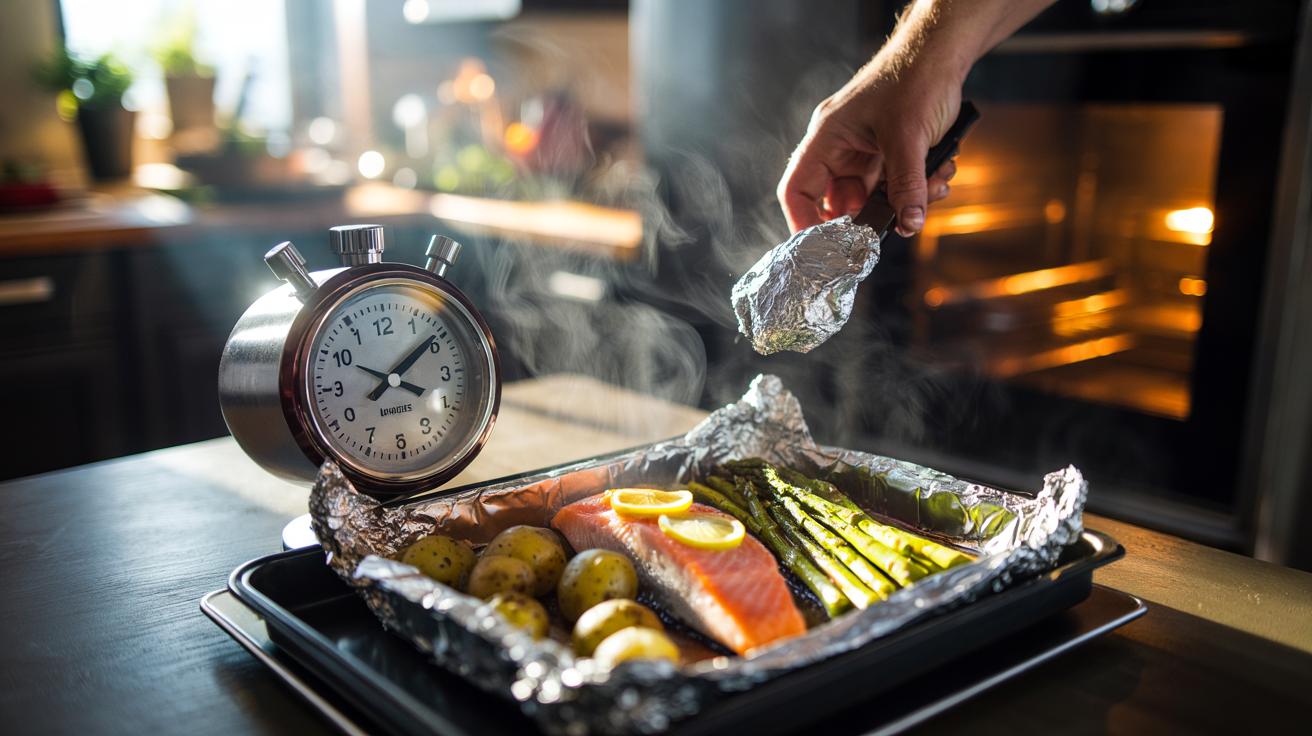
Build foil packets (“en papillote”, the low-fuss way) for fish, asparagus, lemon, and herbs: 10–12 minutes at 200°C often replaces a 20–25 minute uncovered bake. For chicken strips or tofu, add a tablespoon of stock or citrus; the trapped steam speeds heat transfer, then a final 3–5 minutes unwrapped restores sizzle. Steam to cook, air to crisp—work in that order. Pre-line trays and preheat them. When veg or sausages hit hot foil, the initial sear shaves minutes and locks in juices.
Try a “foil boat” for mixed tray bakes: fold edges up to pool fats and juices under the food, amplifying conductive heat. Batch-cook grains by covering a shallow pan tightly; the trapped vapour drives faster absorption. Grilling? Double-wrap corn or halloumi to create steamy pouches that finish while the rest of the barbecue warms. In air fryers, use perforated foil slings to speed clean-up and lift delicate items; keep side vents clear for airflow and crispness.
Resting matters too. Wrap steaks or jointed chicken loosely in foil after high-heat searing. Carryover cooking finishes the centre in minutes you don’t spend on the hob. Meanwhile, line and load the next tray—turnaround time collapses. Below is a quick reference for likely savings.
| Dish/Method | Traditional Time | With Foil | Why It’s Faster |
|---|---|---|---|
| Fish in packet | 20–25 min | 10–12 min | Steam speeds heat transfer |
| Tray veg (preheated foil) | 35–40 min | 22–28 min | Hot conduction from first contact |
| Chicken thighs, tented then uncovered | 35–45 min | 25–30 min | Interior cooks fast, finish for browning |
| BBQ corn, double-wrapped | 20–25 min | 12–15 min | Moist heat in a sealed pouch |
Safety, Sustainability, and Smart Clean-Up
Use heavy-duty aluminium foil for high heat or sharp bones to avoid tearing. Don’t block airflow entirely in an air fryer; perforate or leave gaps. Avoid direct foil contact with very acidic or salty foods at high temperatures for long periods; line with baking parchment between food and foil if needed (keep below ~220°C for parchment). Never put foil in a microwave. Always check doneness with a thermometer: 63°C for fish, 75°C for poultry, 82–85°C for legs and thighs.
Clean-up is where time savings multiply. Lift and bin greasy foil, then give trays a quick wipe—no overnight soaks, no scorched-on starch. A loosely crimped “drip guard” under bubbling lasagne saves oven scrubs. For sticky glazes, a two-layer approach—parchment under, foil over—protects both flavour and trays while preserving moisture control.
On sustainability, foil is widely recyclable when clean. Wipe, flatten, and ball it together; a tennis-ball-sized lump helps sorting machinery. Choose 100% recycled foil where available. Factor in the energy you save by cutting oven time and lowering set temperatures—the net footprint can drop. Think of foil as a precision tool: use it deliberately, reuse when clean, recycle when done.
Used with purpose, aluminium foil is less a kitchen convenience and more a time-management strategy. It channels heat, preserves moisture, and protects texture, all while slashing washing up and energy use. You’ll spend fewer minutes hovering by the oven and more at the table, with meals that taste as if they took far longer. Small sheets, big gains. Which dish in your weekly rotation would benefit most from a speed-boosting foil tactic, and what will you try first?
Did you like it?4.5/5 (22)