In a nutshell
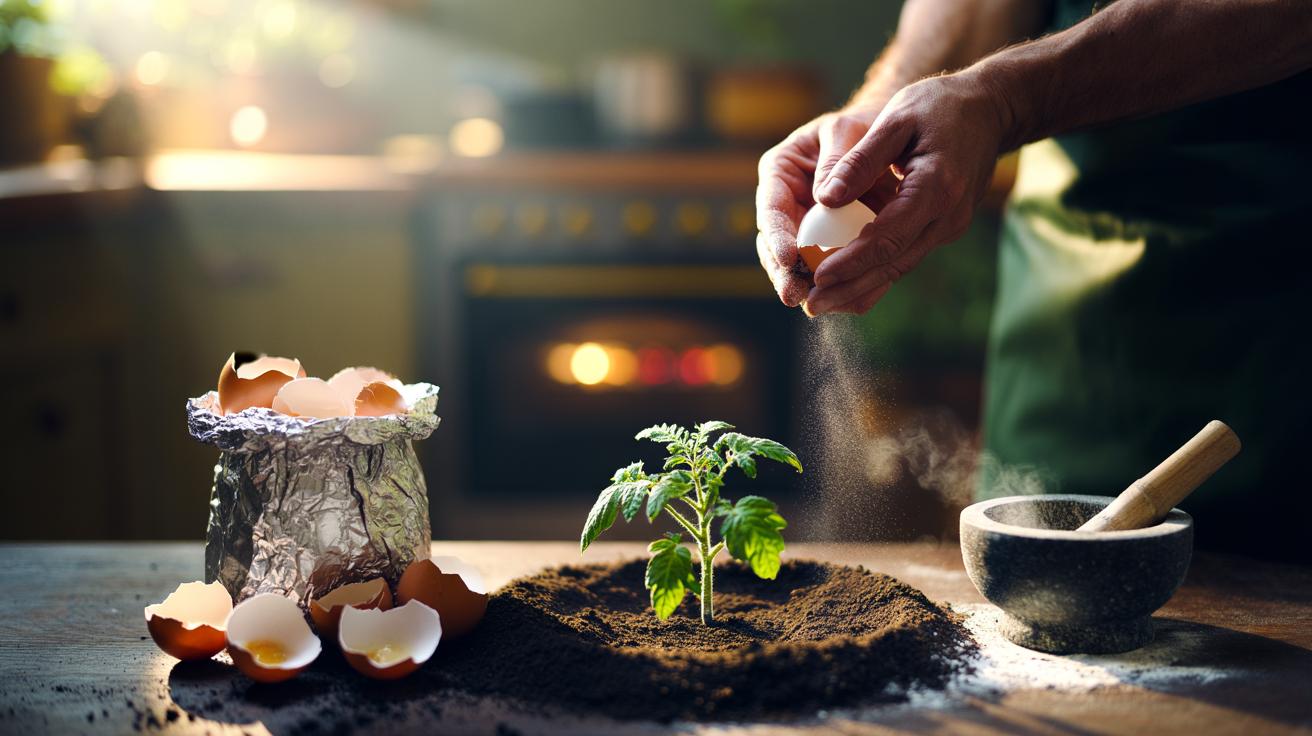
- 🥚 Wrapping clean eggshells in aluminium foil and heating for 5–7 minutes creates a brittle, sterile, easy-to-grind calcium-rich powder for rapid soil integration.
- ⚙️ The five-minute method: rinse, seal in a foil pouch, bake at 220°C (200°C fan) for 5–7 minutes, then crush to fine powder; avoid microwaves and store airtight; wear a light dust mask when grinding.
- 🌱 Benefits and limits: provides slow-release calcium, gently buffers pH, strengthens cell walls and supports microbes, but won’t instantly fix issues like blossom-end rot without steady watering.
- 📏 Smart application: use 30–60 g/m² on beds and 1–2 tbsp per litre of potting mix; ideal for compost; skip acid-loving plants (blueberries, azaleas); choose gypsum if you need Ca without raising pH.
- 📊 Comparison guide: contrasts eggshell powder with garden lime, gypsum, and coarse shells by speed, use-case, and cautions to help you pick the right amendment.
Five minutes. That’s all you need to turn breakfast leftovers into a potent soil tonic. By wrapping clean eggshells in aluminium foil and giving them a brief blast of heat, you can create a crisp, crushable material that pulverises into a fine calcium-rich powder. The trick is simple, tidy, and surprisingly effective. It dries shells fast, kills pathogens, and supercharges surface area, which speeds up how soil life unlocks nutrients. Powder beats chunks every time for release and uniform mixing. As a rapid, low-cost hack for gardeners and allotmenteers, it offers a neat way to nudge soil pH, support sturdy stems, and keep compost humming—without a trip to the garden centre.
Why Wrapping Eggshells in Foil Works
Eggshells are mostly calcium carbonate (CaCO₃), with traces of magnesium and phosphorus. In big pieces they’re stubborn; they break down slowly and patchily. Wrap them in foil and apply quick heat, however, and two things happen. First, moisture flashes off and the membrane dries, which stops clumping. Second, the shells become brittle, shattering cleanly into a fine powder that microbes and mild soil acids can access more readily. The faster you can increase surface area, the faster soil life can do its work. It’s physics, not magic.
The foil pouch acts like a mini oven liner. It concentrates heat, prevents odours, and keeps fragments contained, so your trays and grinders stay clean. Five minutes in a preheated oven is typically enough to sterilise the shells and drive off residual damp. Then, a quick blitz with a mortar, rolling pin, or spice mill gives you a uniform amendment that integrates into compost, seed mixes, or beds. Avoid microwaves—foil doesn’t belong there, and arcing is a real hazard. Used sensibly, this is an elegant way to turn kitchen waste into a slow-release soil ally.
Five-Minute Method: Step-by-Step
1) Rinse shells and let them air-dry on the counter. No need to be fussy; a quick swill removes albumen that could smell. 2) Preheat your oven to 220°C (200°C fan). 3) Pile shells onto a sheet of aluminium foil, fold into a loose envelope, and crimp the edges. You want a pouch, not a pressure vessel. 4) Bake for 5–7 minutes until the packet feels hot and the shells are bone-dry. If you see browning, you’ve gone long—dry, not toasted, is the goal.
Cool the pouch, then tip shells into a sturdy bag or mortar and crush to dust. A small spice grinder works brilliantly—short pulses, 10–20 seconds. For extra abrasion, add a teaspoon of dry sand, then sieve the powder; return coarse bits for another grind. Store in an airtight jar with a silica sachet to keep it crisp. Application rates: mix 1–2 tablespoons per litre of potting mix, or broadcast 30–60 g per m² on beds and lightly rake in. Water after applying. Wear a simple dust mask if grinding fine—calcium dust is benign but drying to lungs.
Soil Payoff: Benefits, Limits, and Science
Finely milled shells provide a gentle nudge of calcium that supports cell walls, strong stems, and root health. In acidic soils, they can modestly buffer pH toward neutral, helping microbes work at their best. They also supply grit prized by worms and soil invertebrates, improving aggregation. What they don’t do is perform miracles overnight. Even as powder, shells are a slow-release amendment; availability depends on particle size, biology, and moisture. Use them to maintain calcium and temper acidity over months, not as an instant cure.
For context, compare common amendments and their tempo below.
| Amendment | Main Nutrient | Speed of Effect | Typical Use | Cautions |
|---|---|---|---|---|
| Eggshell powder | Calcium carbonate | Slow to moderate | Maintain Ca, buffer mild acidity | Not for acid lovers; needs fine grind |
| Garden lime | Calcium carbonate | Moderate | Raise pH in acidic beds | Overuse can lock micronutrients |
| Gypsum | Calcium sulphate | Moderate | Add Ca without raising pH | Limited impact on pH |
| Coarse shells | Calcium carbonate | Very slow | Worm grit, compost structure | Patchy, negligible short-term effect |
Blossom-end rot is mostly about inconsistent watering and uptake, not just calcium presence in soil. Eggshell powder helps where calcium is low, but it won’t fix drought stress. Pair with steady irrigation and mulch. Keep expectations grounded, and the results are solid.
Smart Application: Where, When, and How Much
Use eggshell powder when building beds, refreshing containers, or turning a compost heap. Mix it through the root zone rather than leaving it in clumps on the surface. For veg beds and perennials, apply 30–60 g per m² in spring; repeat lightly in autumn if soil tests show low Ca. In potting mixes, 1–2 tablespoons per litre is ample for tomatoes, brassicas, and peppers. Skip blueberries, azaleas, rhododendrons, and other acid-loving plants—raising pH will set them back.
Compost loves it: sprinkle a handful per 10–15 litres of material to stabilise acidity and provide grit that helps worms grind fibrous matter. On lawns, a light dusting ahead of rain can help on sour soils, but test first with a simple pH kit. If you need calcium without shifting pH, choose gypsum instead. Always sift out foil scraps before storage or spreading. The aim is clean powder, not stray aluminium in beds. Keep records—date, dose, crop—so you can tune your regimen. Little and often beats big, erratic applications.
This foil-boost method turns a humble breakfast remnant into a practical, frugal amendment you can make between kettle boils. It’s quick, clean, and scalable, from a windowsill pot to an allotment row. Five minutes to prep, months of steady benefit. Treat it as part of a wider soil plan—organic matter, mulch, and watering discipline—and it pays back season after season. Ready to try the pouch-and-powder routine this weekend, and if you do, which crop will you feed first—tomatoes, brassicas, or your compost heap itself?
Did you like it?4.5/5 (22)