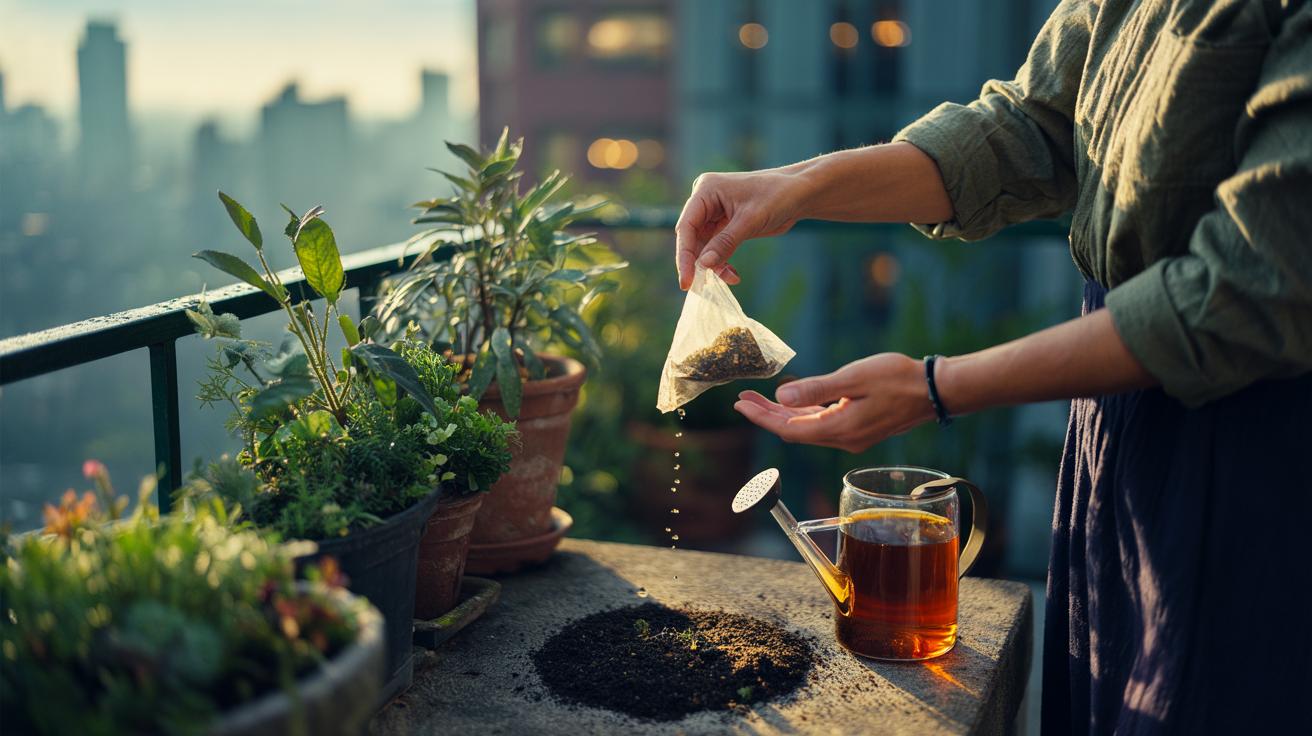
In a nutshell
- 🌿 Used tea leaves add organic matter and trace nutrients, sparking microbial activity that improves soil structure and moisture balance; focus on plastic-free bags or empty the leaves.
- 🫖 Apply safely: crumble a thin layer into the top 1–2 cm, or make a dilute “tea tonic” and use every 2–4 weeks; alternate with regular feed and flush monthly; skip seedlings.
- 🍵 Choose wisely: plain black/green teas are reliable, gentle herbal infusions suit sensitive plants; avoid flavoured blends with oils or sugars that attract mould and pests.
- ⏱️ Expect subtle overnight perks (steadier moisture, perkier leaves) and long-term gains—more humus, higher CEC, steadier growth; tea is a conditioner, not fertiliser.
- ⚠️ Watch for overuse: sour smells, fungus gnats, or sticky surfaces; improve drainage, fluff the top layer, let pots dry, and use a proper feed—observe and adjust.
What if the secret to lusher balcony plants was already in your kitchen caddy? Across the UK, resourceful growers are turning to used tea bags as a fast, frugal nudge for container gardens. The promise sounds almost magical: perkier leaves by morning, deeper greening within weeks. There’s truth in it, but also nuance. The mild nutrients in spent leaves, the fibrous organic matter, and the gentle, amber moisture form a trifecta that container soil craves. When applied thoughtfully, tea can shift a tired pot from sluggish to spirited. Here’s how to make that instant green oasis happen, without the mess or myths that often brew around it.
Why Used Tea Bags Help Plants
Tea is, at heart, processed foliage. Once brewed, those leaves still carry a whisper of nitrogen, traces of potassium, and a buffet of polyphenols such as tannins. In a pot, where soil life is constrained, this trickle of nutrition can jump-start microbial activity. Microbes nibble on the softening leaf fragments, releasing plant-available compounds while knitting together finer particles into stable aggregates. That microbial spark is the quiet engine behind healthier, more resilient balcony containers.
Structure matters just as much. Spent tea leaves behave like a delicate, fibrous mulch. They improve moisture retention, reduce surface crusting, and add a light, spongy texture that container mixes often lack after a summer of watering. This helps roots breathe. It also slows the swing between “bone dry” and “waterlogged.” For best results, focus on the leaves themselves rather than the bag; many sachets contain heat-resistant polymers. Choose plastic-free, unbleached bags or empty the leaves and discard the wrapper.
Caveats keep things sensible. Black and green teas aren’t strongly acidic after brewing, yet they still carry caffeine and tannins that can stress seedlings if piled on. Flavoured teas may introduce oils and sugars that invite mould. Think of used tea as a light tonic, not a full meal. That means small amounts, well mixed into the top couple of centimetres, and time for the pot to breathe. Your reward is subtle but real: a livelier soil system that feeds your plant, not just the plant itself.
How to Use Tea Bags Safely on a Balcony
Start simple. Let bags cool, then remove staples, strings, and any labels. Split them open and crumble the damp leaves over the pot surface. Aim for a thin sprinkle—no thick mats. Work the leaves into the top 1–2 cm to discourage fungus gnats and to speed decomposition. Water lightly to settle them. Less is more if your balcony is shaded or breezy, where pots can stay damp for longer.
Prefer a cleaner routine? Make a gentle “tea tonic.” Re-steep 2–3 used bags in a watering can for 10–15 minutes, then dilute until it looks like weak straw-coloured water. Apply to established plants no more than once every 2–4 weeks. Skip young seedlings. Tea water can complement your usual feed, but stagger applications: mineral fertiliser one week, tea water the next. Flush the pot with plain water monthly to prevent build-up of soluble compounds and to keep the root zone sweet.
Balcony constraints shape the rules. Containers have finite biology and limited drainage headroom. Prioritise good drainage, not just moisture. Use tea leaves alongside mature compost, not as a replacement. Avoid flavoured or sweetened teas that may attract pests. If your bags aren’t clearly plastic-free, always empty the leaves and bin the wrapper. Observe your plants: if they look happier, keep the rhythm; if they stall, pause and reassess. A light touch prevents sour smells and keeps microbes on your side.
Choosing Teas: Green, Black, and Herbal
Not all brews give the same boost. Traditional black and green tea leave behind modest nutrients and cellulose-rich fragments that feed soil life. Herbal infusions like chamomile or peppermint are caffeine-free and often gentler on tender plants. Watch for hidden extras: flavoured blends can include oils, citrus peel, or sweet additives that complicate decomposition. Decaffeinated teas reduce caffeine concerns but may have undergone processing that adds little benefit. The rule of thumb is pragmatic: plain leaves are your friend; perfumed party blends belong in your mug, not your pot.
| Tea Type | Key Compounds | Best Use | Watch-outs |
|---|---|---|---|
| Black | Tannins, trace nitrogen | Top-dressed and mixed in lightly | Caffeine; avoid thick layers |
| Green | Polyphenols, mild nutrients | Tea tonic for established plants | Potential leaf scorch if too strong |
| Herbal (Chamomile) | Soothe-leaning compounds | Seedling-friendly rinse, very dilute | Evidence is anecdotal; keep light |
| Mint / Peppermint | Aromatic oils | Odour control in pot surface mix | May deter beneficial insects |
| Flavoured blends | Oils, citrus, sugars | Generally avoid in pots | Mould and gnat attraction |
Use this as a steer, not scripture. Plain, plastic-free tea leaves will do the quiet work of feeding microbes and improving texture. Herbal options can be handy around sensitive plants, though their benefits are typically softer and slower. Whatever you brew, keep additions small and observe how the pot responds after a few days. That feedback loop is worth more than any label claim.
Results You Can Expect Overnight and Long Term
Overnight changes are subtle but satisfying. A lightly mulched surface stays moist longer. Leaves may look less limp at dawn because the root zone held water more evenly. You’ll see the potting mix darken, the top layer loosen. If you sniff, there’s a fresher, earthy aroma rather than a stale, peat-like note. These are all signs that microbial life has perked up and your pot is better buffered against heat and wind. It’s not a miracle; it’s a nudge.
The deeper shift takes weeks. Mixed into the top few centimetres, tea fragments break down, adding tiny but meaningful amounts of humus. That improves cation exchange capacity, so nutrients from your regular feed stick around for roots to grab. You may notice steadier growth, fewer midweek droops, and improved leaf colour if your prior mix was exhausted. Do not expect heavy feeding: tea is a conditioner, not a substitute for balanced fertiliser, especially for hungry crops like tomatoes or chillies.
Watch for signs of overdoing it. A sour smell, persistent fungus gnats, or a sticky film on the surface suggests too much organic matter staying wet. Pull back, fluff the top layer with a fork, and let the pot dry between waterings. If you see pale new leaves, that’s a cue for a proper feed, not more tea. Do not rely on tea alone for nutrition. Pair light tea additions with compost, occasional mineral fertiliser, and suitable container size to create a resilient, low-waste system.
Turning yesterday’s brew into today’s balcony boost is simple, thrifty, and oddly satisfying. Used leaves nourish the soil community, smooth out watering peaks, and help your pots look fresher by morning. The longer arc—better structure, calmer plants, fewer wasteful inputs—arrives with patience. Small rituals, repeated, make the biggest difference. Will you try a week-long experiment—two light tea additions, careful observation, and a photo before-and-after—to see what changes on your railings and window boxes? What did your plants tell you back by breakfast?
Did you like it?4.6/5 (23)