In a nutshell
- 🍌 Banana peels act as a gentle, slow-release lawn fertiliser rich in potassium (with some phosphorus, calcium, magnesium), boosting stress tolerance and colour without excess nitrogen or scorch.
- 🧪 Practical methods: make “peel tea” (soak 24–48 hours), dry and crumble to topdress after mowing, or compost first; water lightly after, avoid tossing whole peels, and manage wildlife by burying or composting.
- 🕒 Timing and dosage for UK lawns: apply in spring and late summer; tea monthly, dried peel every 6–8 weeks; roughly 2–4 peels per month across a small lawn; rinse peels, wash hands, and pair with aeration and sharp mowing.
- ⚖️ Comparison: peels provide microbe-mediated feeding and strong K, while conventional feeds offer adjustable N-P-K and fast green-up; the best programme uses peels as a base and tops up N only when needed.
- ✅ Expected outcomes: steadier growth, improved soil microbiome and structure, better moisture handling; not instant neon—track colour and resilience, avoid overapplication to prevent thatch, and apply in the cool morning.
Your banana skins aren’t just kitchen cast-offs. They’re a thrifty, plant-powered ally that can nudge a tired lawn towards thicker blades and a brighter green. Many gardeners swear by them, and with reason: peels deliver key minerals, fuel soil life, and help moisture linger where roots can drink. It isn’t magic. It’s biology and timing. Used correctly, banana peels act as a gentle, slow-release fertiliser that supports steady turf growth without the scorch risk of harsh synthetics. Expect a modest but noticeable uplift in resilience and colour, not a neon makeover. Still, for households seeking low-cost, low-waste care, peels are a smart addition to your lawn toolkit.
The Science Behind Banana Peels as Lawn Food
Banana peels are naturally rich in potassium (K) and carry useful amounts of phosphorus (P), trace calcium and magnesium, plus polyphenols that soil microbes relish. In turf, potassium strengthens cell walls and water regulation, helping grass blades cope with heat, traffic, and summer stress. Phosphorus supports root development. That duo translates into sturdier growth you can see and feel underfoot. Unlike high-nitrogen granules, peels contain only modest nitrogen (N), so they won’t force a weak flush that needs constant mowing or invites disease.
Here’s the kicker. Peels don’t just feed grass; they feed the soil microbiome. As the peel breaks down, microbes process its sugars and fibres, releasing nutrients in step with root demand. That’s a classic slow-release pattern: fewer spikes, more stability. The peel’s carbon also helps soil structure. Over time, that can improve drainage in heavy clays and moisture retention in sandy patches. Think of banana peels as a nudge towards a living, balanced soil, not a quick chemical fix. It’s small-scale circular economy, right under your feet.
Simple Methods: From Peel Tea to Mulch and Compost
If you want speed, make a “peel tea.” Soak chopped peels in a bucket of rainwater for 24–48 hours, stir, and strain. Water the lawn at the root zone; scatter the softened peel in the compost or bury it in beds to deter pests. The liquid carries soluble potassium that plants can access quickly. It’s not a miracle, but it’s a friendly boost before a warm spell. Apply in the early morning to reduce evaporation and maximise uptake.
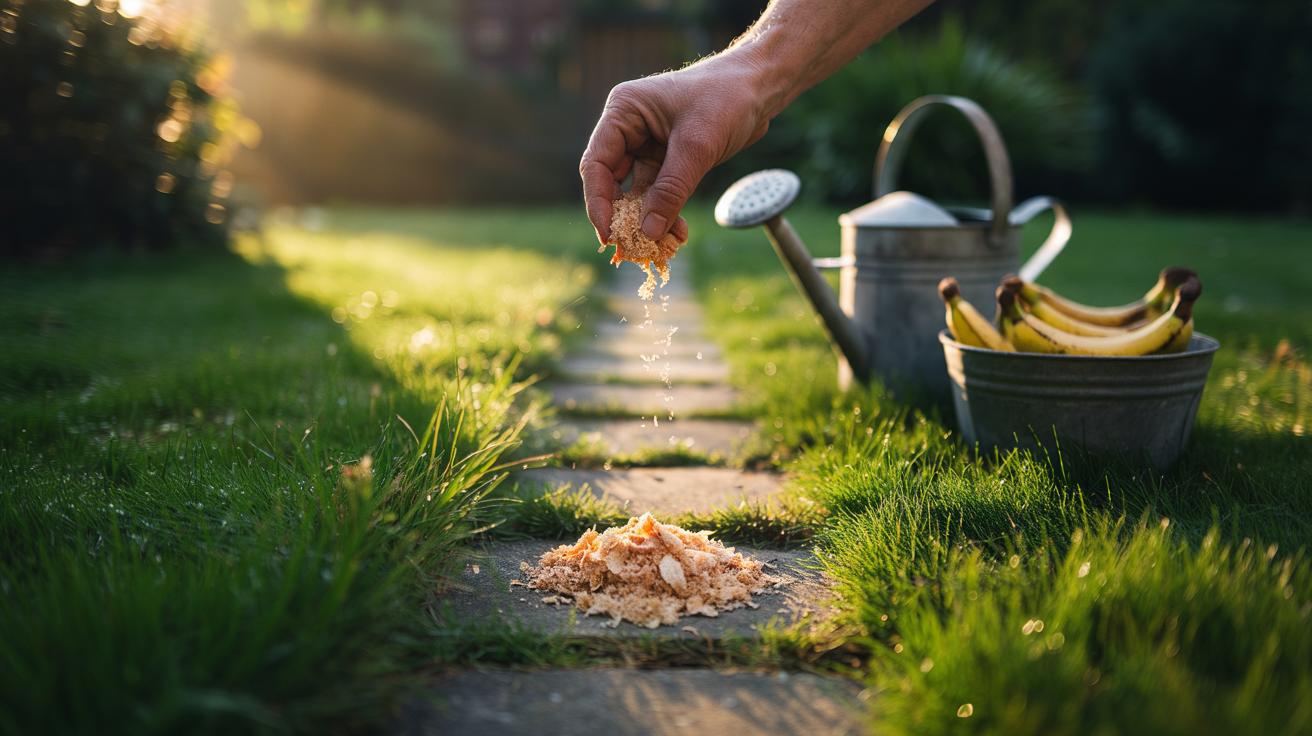
For steady feeding, dry peels on a sunny windowsill or a very low oven, then crumble and topdress thinly after mowing. Alternatively, blend peels with garden waste to make a microbe-rich compost and rake a fine dusting across the sward. Keep the layer light; avoid smothering blades. Never toss whole peels onto the turf—besides looking untidy, they can lure foxes or rats. Bury or compost peels to keep wildlife, and your neighbours, on side. With any method, water lightly afterwards to settle nutrients into the root zone.
Timing, Dosage, and Safety for UK Lawns
In the UK’s temperate climate, aim peel-based feeds for spring and late summer when soil biology is lively and grass is actively growing. After a mow, when clippings aren’t clumping, is ideal. A sensible cadence: peel tea once a month in-season; dried peel dusting every 6–8 weeks. For most small lawns, the equivalent of 2–4 peels per month spread across the area is ample. More is not better—excess organics can invite thatch or patchy decay. Balance peels with regular aeration and a tidy mowing routine.
Safety matters. Wash hands after handling peels, especially if the fruit wasn’t organic. Rinse peels before use to reduce surface residues. If local wildlife is persistent, stick to compost-first methods rather than direct application. Monitor your turf. If colour deepens but growth stays measured, you’re in the sweet spot. If the lawn looks hungry—pale, thin, easily stressed—pair peels with a modest, balanced fertiliser that supplies nitrogen. The goal is resilient grass and active soil, not a brief green flash. Keep records; your lawn’s response will guide future tweaks.
Comparing Banana Peels With Conventional Fertilisers
Banana peels shine as a low-cost, low-waste supplement, but how do they stack up against a bagged feed? Traditional granules deliver precise N-P-K ratios and fast greening—handy before an event or after winter. Peels, by contrast, offer a gentle, microbe-mediated release with strong potassium support but limited nitrogen. Used together thoughtfully, they form a complementary programme that’s kinder to soil and budgets. Think of peels as the steady bassline, synthetics as the occasional solo.
| Nutrient/Feature | Role in Lawn Health | Banana Peels | Conventional Fertiliser |
|---|---|---|---|
| Nitrogen (N) | Leaf growth, colour | Low | Adjustable/High |
| Phosphorus (P) | Root development | Moderate | Adjustable |
| Potassium (K) | Stress tolerance, water balance | High | Adjustable |
| Release Pattern | Consistency of feeding | Slow, biology-led | Fast to controlled |
| Soil Life Impact | Microbial activity | Supports microbes | Neutral to mixed |
| Cost & Waste | Budget, sustainability | Repurposed kitchen waste | Purchased input |
In practice, start with peels to strengthen roots and resilience, then top up nitrogen with a light, slow-release product if needed. Water after any application. Don’t chase an instant glow at the expense of long-term health. Healthy soil is the engine; fertiliser is fuel. Get the engine humming, and the lawn follows.
Banana peels won’t turn a threadbare patch into Wembley in a night, but they can tilt the odds. Their strengths—potassium, microbe food, gradual release—mesh beautifully with the needs of UK turf, especially as summers swing hotter and drier. Start small, observe closely, and combine with good habits: sharp blades, sensible mowing heights, seasonal aeration. It’s the blend of practices that delivers lasting, confident green. Ready to rescue those peels from the bin and put them to work on your lawn—what method will you try first, and how will you measure the change?
Did you like it?4.6/5 (25)