In a nutshell
- 🍌 A banana peel can deliver a quick, eco-friendly 30-second shine to smooth leather shoes—ideal for last-minute rescues and commuter crises.
- 🧪 It works via natural oils, wax-like compounds, and sugars that create a thin gloss; test first and avoid suede/nubuck to prevent staining.
- ⚡ Steps: wipe dust, rub the inside of the peel in small circles, then buff briskly for ~20 seconds; ensure no sticky residue on stitching or welt.
- ⏳ Expect a clean, light-to-medium shine that lasts hours; it won’t fix deep scuffs and is no substitute for regular conditioning and wax protection.
- 🆚 Versus traditional polish: peel is faster and cleaner; polish offers stronger protection, deeper gloss, and longevity—use both for maintenance and emergencies, with a nod to sustainability.
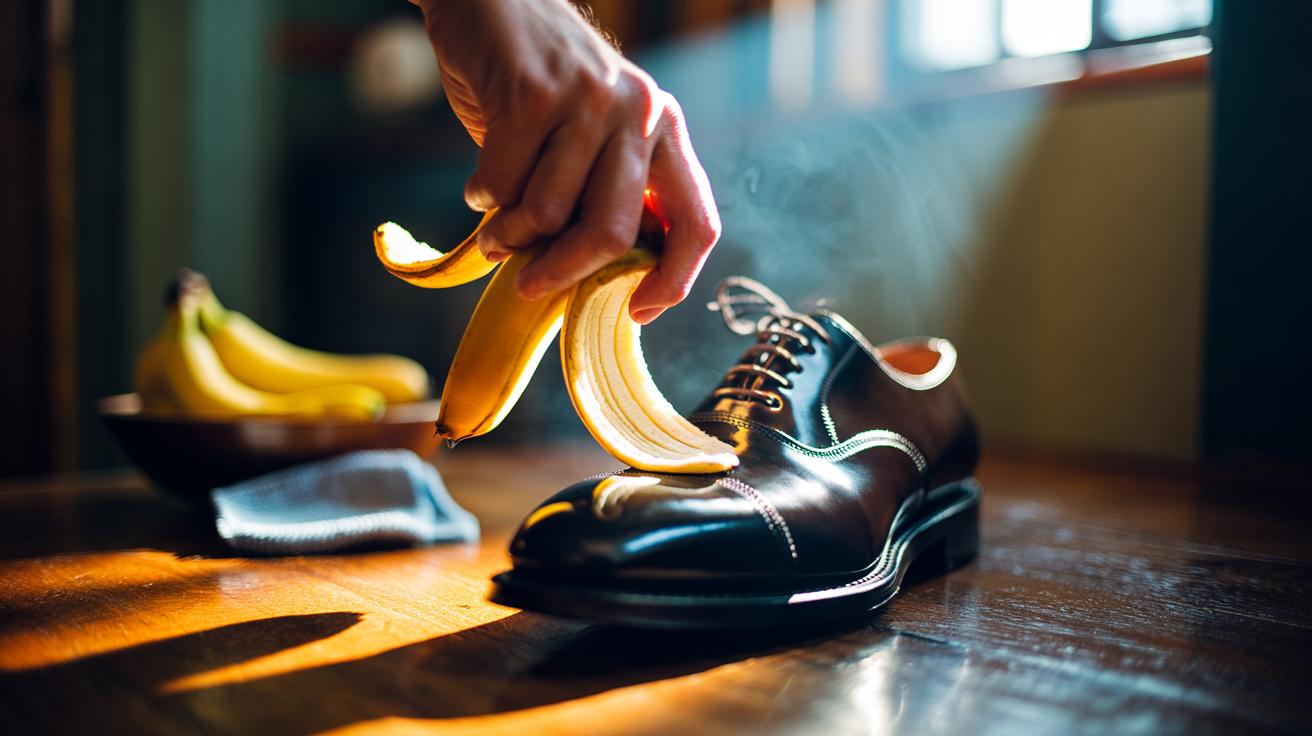
Rushing out the door, you glance down and wince: scuffed shoes, dull as a grey Monday. Enter the unlikely hero sitting in your fruit bowl. A banana peel can restore a surprising shine to smooth leather in as little as 30 seconds, turning a commuter’s panic into a neat party trick. It’s cheap, quick, and quietly eco-friendly because you’re using something that would otherwise become waste. The trick isn’t magic; it’s simple chemistry and smart buffing. Used correctly, the peel gives a crisp, interview-ready glint that reads as “I tried,” without the faff of brush kits and tins. Sound improbable? It works, with a few sensible caveats.
Why a Banana Peel Works on Leather
Banana skins carry trace amounts of natural oils and wax-like compounds that can sit lightly on the surface of smooth leather. When you rub the inside of the peel against a shoe, those compounds transfer, then spread thinly during buffing. Friction warms them. The layer levels out. Result: a quick, optical gloss that mimics a light polish. Potassium is often mentioned; you’ll also find plant lipids and sugars. They don’t repair leather, but they do make it look cleaner, richer, more uniform under streetlight or office LEDs. Think of the peel as a cosmetic finishing touch, not a full maintenance routine.
There are limits. The method is best for smooth-finished leather: black Oxfords, derbies, loafers, Chelsea boots. Patent leather already has a sealed glaze; the effect will be minimal. Do not use on suede or nubuck, where moisture and sugars can stain the nap. On very light brown shoes, a peel can deepen tone temporarily; test first. The British climate adds a twist: drizzle, puddles, and grit will dull the quick shine faster than a wax with proper water resistance. That’s fine. This is a sprint finish, not a marathon maintenance plan.
Step-by-Step: The 30-Second Shine
Set a timer if you like. It’s brisk but doable. First, wipe the shoes with a dry cloth or sleeve to remove dust. Take a ripe—but not mushy—banana. Peel it. Eat the fruit or set it aside. You’ll use the inside of the peel, where the soft fibres and oils sit. Test on an inconspicuous spot first. If the leather darkens nicely and doesn’t streak, proceed.
Work in small circles. Heel to toe, then toe to heel, applying gentle pressure. Ten seconds total is plenty to lay down a thin film across the vamp and quarters. Pay extra attention to toe caps, where scuffs show most. Swap to a clean, dry cloth, tissue, or even kitchen roll. Now buff quickly. Fast, light strokes, as if you’re polishing a lens. Twenty seconds of buffing is enough to lift the sheen and remove any banana residue. The shine appears as a crisp, even gloss.
Check edges. If you see smears, keep buffing until the surface feels clean, not tacky. Never leave peel residue on stitching or welt; it’ll attract dust. A final once-over with a microfibre cloth sharpens the reflection. That’s your commuter rescue, done.
What to Expect: Results, Limits, and Longevity
Expect an instant refresh, not a mirror parade gloss. The banana peel gives a tidy, camera-friendly pop that hides shallow scuffs and evens colour. Deeper gouges or dried, thirsty leather won’t be fixed. They need proper conditioning with cream, then wax. The peel is a quick fix for appearances, not a substitute for care. On black shoes the effect is strongest, especially under indoor lighting. On mid-browns, it’s subtler—more richness than gleam.
How long does it last? In dry conditions, several hours; enough for a meeting, a date, a dinner service. In rain or on gritty pavements, the gloss fades faster. You can repeat the trick without fear of build-up if you buff thoroughly each time. If you overapply and it feels sticky, wipe with a damp cloth, let dry, and rebuff. Odour? Barely noticeable after buffing; any fruity hint disperses quickly.
Long-term, keep a rhythm: weekly cream polish to nourish, occasional wax for protection, and the banana-peel trick as your last-second rescue when the 08:07 to Birmingham is already boarding. That way, you get the best of both worlds—health and shine.
Banana Peel vs traditional polish
Both approaches have a place. The banana peel is the emergency service—rapid, clean, practically free. Traditional polish is the planned service—deeper colour, weather defence, and that parade-ground mirror. If you’re heading to a boardroom or a wedding, use both: proper cream and wax the night before; peel-and-buff if you scuff on the way. Match the tool to the moment.
| Criteria | Banana Peel | Traditional Polish |
|---|---|---|
| Time per shine | ~30 seconds | 5–10 minutes |
| Cost per use | Near £0 (repurposed peel) | Low, but not free |
| Shine level | Light to medium | Medium to high, mirror possible |
| Protection | Minimal | Good, especially with wax |
| Mess/cleanup | Low; quick buff removes residue | Brushes, cloths, potential smears |
| Material compatibility | Smooth leather only | Most leathers; not suede without special products |
The table tells the story: if you need a fast uplift before a pitch, the peel wins. If you want durability against rain, salt, and a long day on the move, polish is king. Many readers use both—one for maintenance, one for emergencies. And because you’re repurposing a peel, it’s a small, satisfying nod to sustainability amid daily chaos.
In a world of complicated hacks and overstuffed kits, this one is disarmingly simple: a banana peel, a cloth, half a minute, and you’re presentable again. It’s not a miracle cure for battered brogues, but it’s a brilliant reset that buys you time until your next proper polish. Keep it in the back pocket of your routine, ready for bright lights and surprise meetings. Will you try the peel-and-buff on your next scuffed morning dash, or do you swear by the old tin and brush—what’s your go-to shine strategy when seconds count?
Did you like it?4.5/5 (29)