In a nutshell
- 🧼 Dryer sheets reduce static, lifting dust and leaving an antistatic layer that keeps blinds cleaner for days; safe for vinyl, aluminum, and faux wood—test first on unfinished wood and choose unscented for sensitivities.
- ⏱️ Two-minute method: work top-down, pinch each slat, make two quick passes (flip slats between), then give a light microfibre buff; run the sheet over cords and wands, fold as it greys, and watch pet hair cling instead of floating.
- 🛠️ Minimal kit, maximum speed: dryer sheet (60–90s), microfibre cloth (20–30s), and a 5-second test patch for wood—low effort, low cost, high impact.
- 🌿 Keep dust away longer: set a light rotation (kitchen Tue, lounge Thu, bedrooms Sat), angle slats to tame warm updrafts, use a damp microfibre in greasy areas, and consider a reusable electrostatic duster for a greener routine.
- 🔬 Science at work: cut surface charge, cut clinging—resulting in fewer cleanings, brighter slats, and better comfort in allergy households when using unscented sheets with brief ventilation.
Blinds are dust magnets, and most of us wait until they look grey before we act. There’s a quicker way. Reach for a dryer sheet. In a couple of swipes, static is tamed, dust lifts cleanly, and future fluff can’t cling so easily. This isn’t a deep-clean hack; it’s a two-minute refresh that keeps rooms looking sharp between bigger jobs. Think of it as your secret weapon for surprise guests or last‑minute video calls. Whether you’ve got vinyl, faux wood, or aluminum slats, this tactic is fast, cheap, and oddly satisfying. Ready to banish the fuzz without hauling out the hoover?
Why Dryer Sheets Beat Dust on Blinds
Dryer sheets carry a light coating of fabric softening agents that reduce friction and static. When you sweep one across your blinds, it does two jobs at once: it lifts loose dust and leaves behind a faint antistatic layer that discourages new particles from sticking. The result: less dust build-up for days, sometimes weeks. It’s the same principle that stops clothes crackling straight from the tumble dryer, simply repurposed for home surfaces. On slatted blinds, that’s gold. You’re not just moving dust around; you’re changing the surface’s relationship with the air itself.
It’s also gentle. Vinyl and aluminum slats don’t scratch easily, and faux wood—sealed or painted—handles the swipe nicely. Take care with unfinished wood: the sheet’s conditioning residue can darken grain or leave smear marks. If you’re unsure, test a hidden corner first. Not all dryer sheets are equal either; unscented or “free & clear” options reduce lingering perfume in small rooms. Quick science: reduce charge, reduce clinging; reduce clinging, reduce cleaning. That’s the simple physics keeping your blinds clearer for longer, without sprays or a dust storm.
The Two-Minute Method, Step by Step
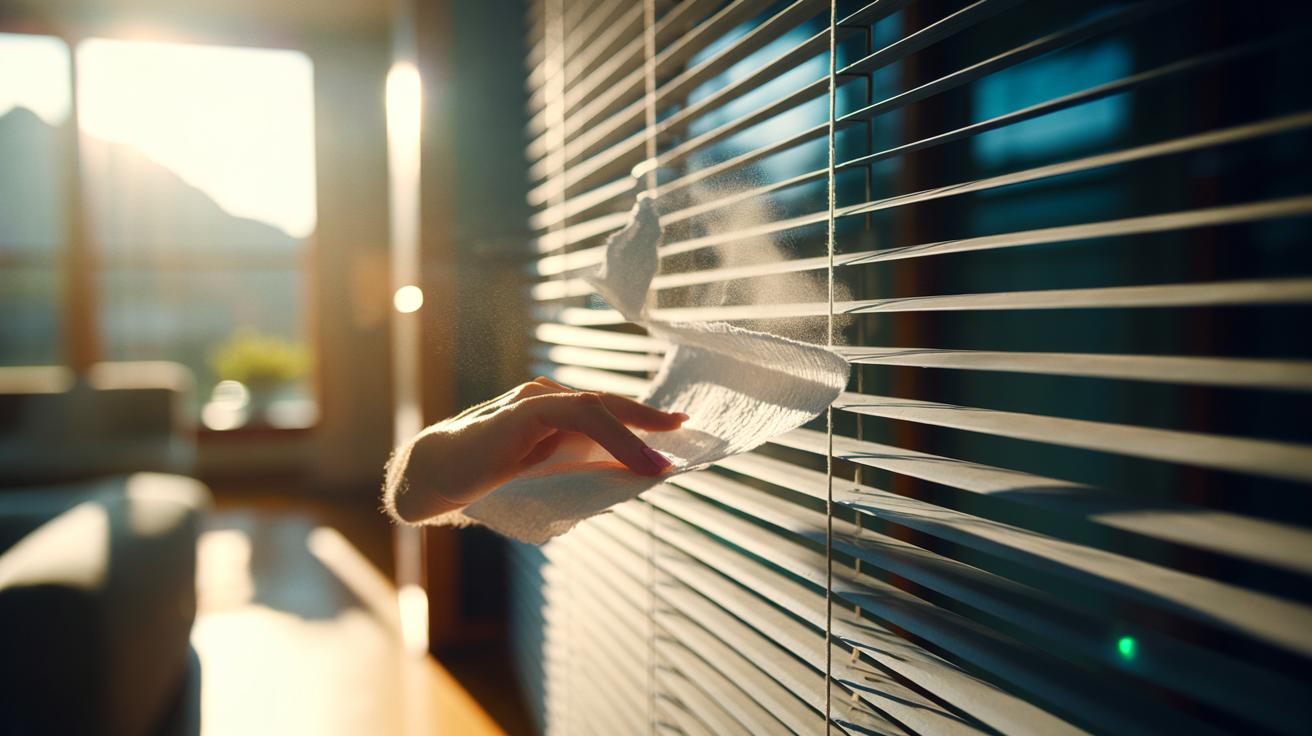
Grab a single dryer sheet, a microfibre cloth (optional), and nothing else. Close the blinds so the slats face you. Start at the top, because gravity. Pinch a slat between your fingers and sweep from ladder string to ladder string. Short strokes. Crisp pressure. Ten seconds per tiered section, tops. Flip the wand or twist the rod to angle the slats the other way, then repeat. Two passes, not five—speed is the point. For wide windows, work in columns to keep track. For Venetian styles, pinch two slats at once to halve your time. Got sticky spots? Breathe onto the sheet for a touch of moisture and rub.
Reserve the microfibre for finishing. One light buff removes any obvious residue on glossy slats. If you’re tackling multiple rooms, fold the sheet to expose a clean face as it greys. It’s impressively efficient: a standard pack treats dozens of windows. Pet hair? The sheet corrals it instead of fluffing it into the air. Pro tip: run the sheet over cords and wand handles—those collect oil from hands and invite dust back faster than slats do. Done right, you’ll see a visibly brighter window line in under two minutes.
| Item | Use | Typical Time |
|---|---|---|
| Dryer sheet | Lift dust, add antistatic layer | 60–90 seconds |
| Microfibre cloth | Quick buff, remove residue | 20–30 seconds |
| Test patch | Check finish on wood | 5 seconds |
Keep Dust Away Longer
Consistency beats intensity. A fast swipe every few days blocks the heavy build-up that turns a simple refresh into a weekend chore. After the initial two-minute clean, set a phone reminder: Tuesday kitchen, Thursday lounge, Saturday bedrooms. That rotation keeps the invisible antistatic benefit topped up. If your blinds sit above radiators or heaters, angle slats slightly down when off—warm updrafts stir dust. In kitchens, follow the dryer sheet pass with a barely damp microfibre every second week to lift light grease that anchors grit. Allergy household? Choose unscented sheets and crack a window for five minutes.
Mind the material. Sealed faux wood, metal, and vinyl are ideal. For real wood, especially oiled or matte finishes, use a microfibre cloth first and a very light pass with the sheet only if your test patch stays clean. Or opt for antistatic microfibre alone. If you prefer a greener route, keep a reusable electrostatic duster on the sill; a monthly hand wash in warm water restores its cling. And watch the adjoining areas: window sills, cords, and frames. They’re dust superhighways. Wipe them when you do the slats. Stop dust at the borders, and it won’t return so fast.
In the time it takes to boil the kettle, you can reclaim your blinds from that dull grey film and keep them brighter for longer with a simple dryer sheet. It’s low effort. It’s low cost. And it works because it changes the rules of static, not just the look of the surface. Try it today on one window and time yourself—you’ll probably beat two minutes. Then decide your rhythm: daily touch-up, weekly reset, or pre-guest blitz. What room will you tackle first, and what tweaks will make this hack fit your space and routine?
Did you like it?4.5/5 (28)