In a nutshell
- 🕒 30 seconds counts: baking soda’s mild alkaline lift and fine abrasion loosen grime fast, preventing re-bonding and making wipe-off effortless.
- 🧪 The chemistry: sodium bicarbonate (pH ~8–8.5) destabilises oils; pairing with vinegar releases CO₂ fizz that shakes loose debris and tackles limescale.
- 🧰 Rapid method: blot, sprinkle, activate, agitate, rinse—use a drop of detergent for grease or a vinegar spritz for tannins/soap scum; keep the area just damp.
- 📋 Practical ratios and surfaces: 1 tsp + water for mugs, 1 tsp + drop of detergent for hobs, thicker paste + vinegar for grout, gentle rub on trainer soles.
- ⚠️ Limits and care: avoid prolonged contact on aluminium and skip vinegar on marble/limestone; for rust or set dyes, use a dedicated remover and always perform a patch test.
Stubborn rings in the mug. Oil spatter welded to the hob. A mysteriously grey patch on trainers. In homes across the UK, these everyday stains feel immovable—until you reach for baking soda. Used cleverly, it can start loosening grime in as little as 30 seconds, cutting through residue before it has time to fight back. The trick isn’t magic; it’s chemistry, abrasion, and timing. Combine a mild alkaline lift with a gentle scrub, sometimes a splash of acid, and you’ve got a fast, safe intervention. Speed is the secret: act before the stain re-hardens or spreads. Here’s how the reaction unfolds—and how to harness it.
Why Thirty Seconds Matters
That half-minute window does two jobs. First, it lets baking soda wet out into pores and micro-scratches, physically wedging under crusted debris. Second, early contact raises local pH, nudging greasy soils to release their grip. Short dwell avoids over-wetting fibres and keeps residue from re-bonding. In practice, the first 10 seconds soften; the next 20 let light agitation do the rest. It feels instant because you’re watching a layered process happen quickly: lift, loosen, remove.
On cookware or tiles, the fine crystals provide micro-abrasion without gouging glaze or steel. A teaspoon creates a thin slurry that slips under burnt sugars and protein films. On fabrics, a paste dabbed onto fresh marks stops migration—especially from tea, coffee, or ketchup—by buffering acidity while you blot. Add a mist of water or a drop of washing-up liquid and the action accelerates, carrying soils into the liquid phase for easy wipe-up.
Pairing with an acid such as white vinegar creates visible fizz. Those bubbles aren’t just theatre. Carbon dioxide agitation rattles loose particles in grout lines and textured plastics. Keep the reaction brief and controlled to avoid saturating porous surfaces. Quick in, quick out, then rinse.
The Chemistry Behind Baking Soda’s Burst
Baking soda is sodium bicarbonate (NaHCO3). In water it makes a mildly alkaline solution, typically around pH 8–8.5. That gentle bump is enough to destabilise many kitchen soils. Grease contains fatty acids; alkalinity helps convert their edges into soap-like compounds that emulsify. Not a full saponification—this isn’t caustic soda—but sufficient to reduce surface tension so grime slides away. The payoff is control: effective shift without harsh damage.
Introduce an acid and things heat up. With vinegar (acetic acid), bicarbonate releases carbon dioxide, water, and sodium acetate. The fizz disrupts films on grout and around tap bases where crumbs and biofilms lodge. Importantly, vinegar dissolves limescale; baking soda does not. Used together, soda scrubs the film while the acid eats the mineral. The 30-second window captures the peak of the bubble lift before the reaction exhausts.
There are limits. Dye-set stains (red wine on cotton), rust, and dried paint won’t bow to bicarbonate alone. Natural stone, aluminium, wool, and silk demand caution: abrasion or alkalinity can mar finishes or weaken fibres. Always test on an inconspicuous patch before scaling up. For odours, the bicarbonate ion binds and neutralises acidic volatiles—hence fresher fridges and trainers—again, fast and with minimal residue.
Step-By-Step: 30‑Second Stain Rescue
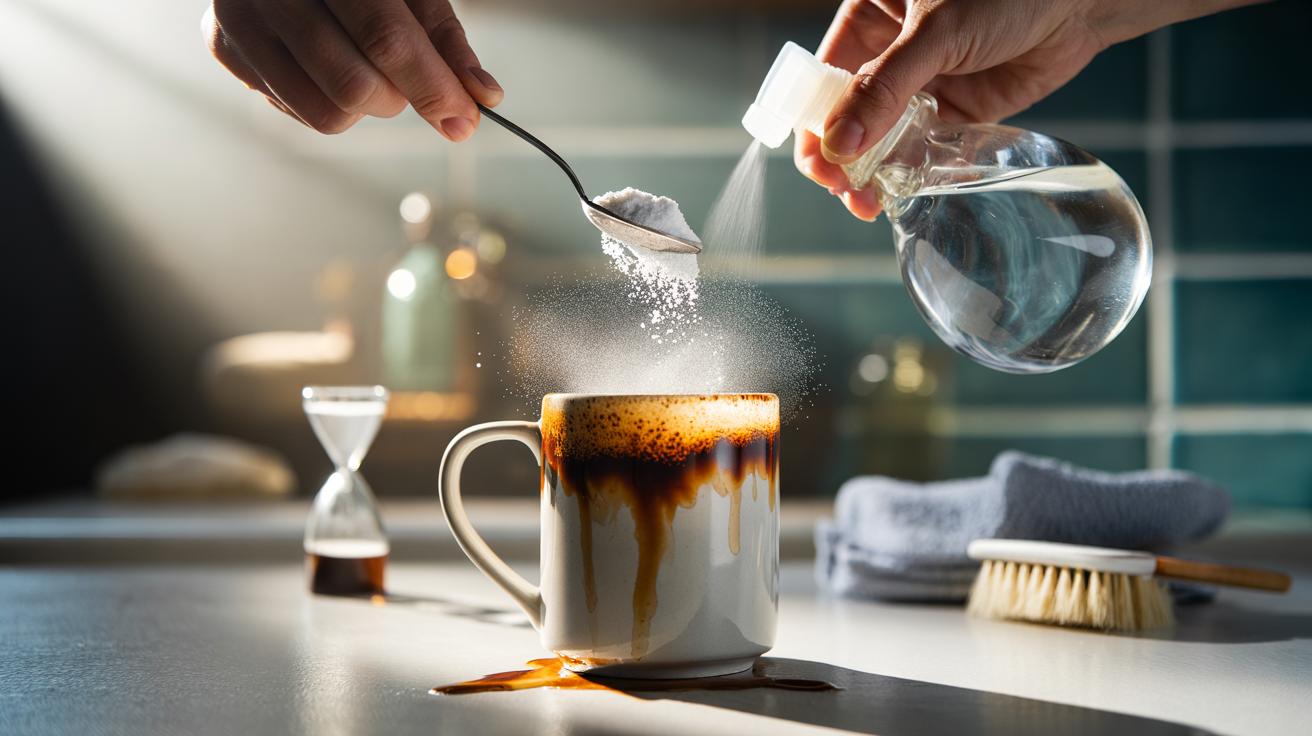
Prep smart. Blot, don’t rub, to remove loose liquid. Dust or scrape off solids. Then target the stain with intention. Sprinkle a thin veil of baking soda directly on the mark or into a damp cloth. For pans and hob plates, add a teaspoon of warm water to form a spreadable paste. For mugs, simply swirl a wet spoonful around the ring. Less is more; you want contact, not clumps.
Activate. For greasy soils, add one drop of washing-up liquid and a mist of warm water. For tannin rings or soap scum, spritz with vinegar and watch the fizz. Count to 30 while the slurry creeps under the soil. Keep the area just wet enough to move. Then agitate: a soft brush on grout, a microfibre on enamel, a soft-bristle toothbrush on trainers. Short, quick strokes. The soil should grey the paste almost immediately.
Finish clean. Wipe the spent paste away, rinse, and dry. On fabrics, follow with a cold-water rinse and standard wash. On metal or ceramic, buff to a shine. If residue remains, repeat once with lighter pressure rather than scrubbing harder. Speed, light touch, and rinse discipline prevent halos and abrasion. For persistent buildup, escalate: longer dwell with detergent, then a separate vinegar pass—not both soaking together on sensitive surfaces.
Quick Reference: Stains, Surfaces, and Ratios
Use this fast guide to choose ratios and activators that exploit baking soda’s 30‑second edge. It’s intentionally simple: teaspoons, drops, and short dwell. Think precision, not piles of powder.
| Stain | Surface | Mix Ratio | Activator | 30‑Second Action |
|---|---|---|---|---|
| Tea/coffee rings | Ceramic mugs | 1 tsp soda + few drops water | None or vinegar mist | Light swirl lifts tannins; wipe |
| Grease splatter | Hob/enamel | 1 tsp soda + 1 drop detergent | Warm water mist | Emulsifies oil; buff clean |
| Grout dinginess | Tile grout | 2 tsp soda + water to paste | Vinegar spritz | Fizz dislodges grit; brush |
| Trainer scuffs | Rubber soles | 1 tsp soda + water | None | Mild abrasion brightens |
| Soap scum | Glass shower | 1 tsp soda + water | Vinegar after wipe | Soda scrubs film; acid finishes |
| Rust/dye transfer | Various | Not recommended | Dedicated remover | Soda insufficient alone |
Remember the red lines. Avoid prolonged contact on aluminium and take care on natural stone; skip vinegar entirely on marble and limestone. On delicate fabrics—wool, silk—keep the solution weak and time short, or choose a specialist cleaner. The goal is swift disruption, not an all-day soak. With those caveats, you can reclaim mugs, brighten grout, and de-grease a hob between kettle boils.
In a world of harsh gels and perfumed sprays, the humble box of bicarbonate of soda still earns a spot under the sink. It’s cheap, fast, and—used with intention—surprisingly surgical. The first half-minute is where it shines, softening residues and letting a small brush or cloth finish the job before stains reassert themselves. Test discreetly, act quickly, and rinse well. From tea-worn cups to sticky pan rims, a teaspoon and thirty seconds can reset the surface. What stain at home will you challenge first with this quick, fizzing routine?
Did you like it?4.5/5 (30)