In a nutshell
- 🧪 Tea’s cleaning edge: tannins and a slightly acidic brew cut grease, reduce surface tension, and help water sheet for fewer streaks.
- 🧰 Simple method: steep 2 black tea bags in 500 ml hot water for 5–7 minutes, cool, wipe in S-patterns with a microfibre cloth, then buff dry for a squeak.
- 🛡️ Smart precautions: avoid drips on porous frames, check tinted or low-e film care, use distilled water in hard-water areas, and prewash heavy grease with mild soap.
- 💷 Frugal and green: costs about £0.08–£0.15 per litre, cuts plastic waste; switch to white vinegar for water spots or a limescale remover for mineral deposits.
- 🧩 Finish like a pro: combine a soap prewash with a tea rinse for a streak-free shine; work in shade, keep cloths clean, and enjoy an eco-friendly routine.
Get Sparkling Windows Instantly: How Tea Bags Cut Through Grime
Shiny panes without chemical fumes? It sounds like a fairy tale until you try the humble tea bag. This quick, low-cost trick has been whispered by professional cleaners and thrifty homeowners alike, and for good reason. When brewed correctly and paired with the right cloth, black tea can lift greasy handprints, dissolve haze, and leave glass gleaming. It’s simple. It’s fast. It’s kinder to your wallet and the air you breathe. No harsh cleaners, no streaky regret. Whether you’re in a rented flat overlooking a busy road or a detached home near the coast, tea-powered cleaning offers a fuss-free route to brilliantly clear windows.
Why Tea Works on Window Grime
At the heart of the method is chemistry you can see. Black tea contains tannins, naturally occurring polyphenols that act as gentle astringents. They help break down the light oils left by fingertips, cooking vapours, and urban film. Brewed tea is also slightly acidic, which assists in loosening stubborn haze without etching glass. While it isn’t a classic detergent, the infusion helps reduce surface tension so water sheets more evenly across the pane. Translation: fewer droplets, fewer streaks, more sparkle. That’s the core advantage—tea lifts the grime so your cloth can carry it away.
There’s another win. Unlike fragrance-heavy sprays, a cup of tea doesn’t leave a synthetic residue that re-attracts dust. Think of it as a clean slate for the glass, especially useful in kitchens where airborne grease lingers. For best results, opt for a robust black tea—everyday blends provide ample tannins, while delicate white teas and herbal infusions don’t pack the same punch. If you live in a hard-water area, pairing tea with distilled water can further cut spotting and keep that crystal finish intact.
Step-By-Step: Brew, Wipe, Buff
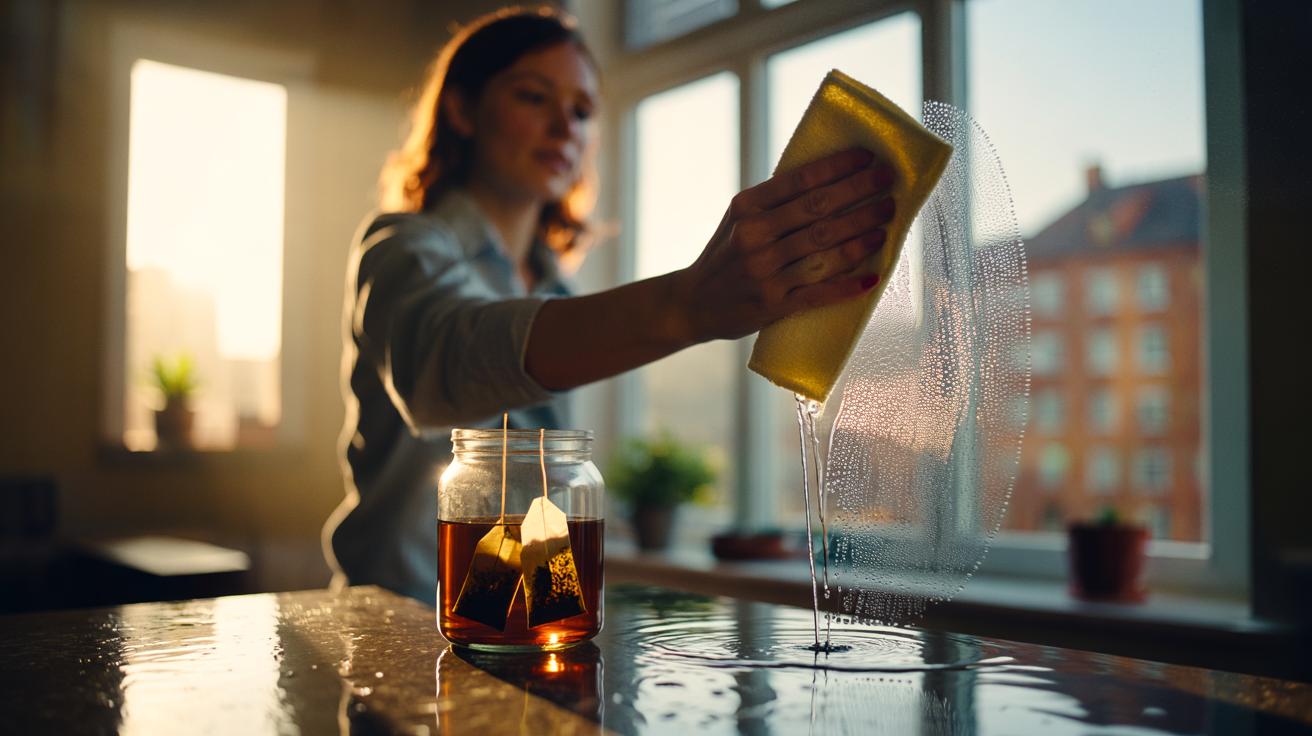
Gather your kit: 2 plain black tea bags, 500 ml hot water, a spray bottle or bowl, a microfibre cloth, and a dry lint-free cloth for buffing. Steep the tea bags in hot (not boiling) water for 5–7 minutes to unlock those tannins. Remove bags. Let the liquid cool until just warm—this helps it spread without flashing off. Never apply boiling liquid to cold glass; sudden temperature swings can be risky for panes in winter.
Decant into a bottle or dip your cloth. Work top to bottom, drawing the cloth in tight S-patterns to corral dirt rather than smear it around. Refresh the cloth often; when it’s loaded with grime, you’re just moving muck. For corners and seals, fold the cloth to create a firm edge. Finish with a dry lint-free cloth, lightly buffing until the glass squeaks. That squeak is your signal: clean and dry. In bright sun, solution evaporates too quickly and can streak. Work in shade or on a cool pane for the most reliable, streak-free shine.
Safety, Surfaces, and Streak-Free Finishing
Glass is resilient, but frames and adjacent materials vary. Tea is tinted. On untreated wood, unsealed stone sills, or porous grout, it can leave a faint stain. Test a hidden spot first and keep your cloth wrung out to minimise drips. If your windows carry a tinted or low-e film, check the installer’s guidance—some films prefer neutral pH cleaners only. Leaded windows and antique glazing putty benefit from gentle pressure; avoid aggressive scrubbing. When in doubt, test, then proceed.
For flawless results, think water quality and cloth choice. Hard water leaves mineral spots that tea can’t dissolve. If sprinklers mist your panes or you’re near the coast, reach for distilled water in the brew, and consider a quick final wipe with a dry microfibre. Battle nicotine or heavy kitchen residue? Pre-cut the grease with a drop of mild dish soap in warm water, rinse with plain water, then finish with tea for the streak-free sheen. Keep your microfibres clean—washed without fabric softener—so they retain their grabby texture and don’t lay down lint.
Cost, Sustainability, and When to Use Something Else
The appeal isn’t only performance. It’s economics and waste reduction. Two generic tea bags and tap water make a litre of working solution for pennies, with almost no plastic and no scent overload. For routine weekly cleans, that’s hard to beat. But there are limits. Tea won’t remove limescale blooms from garden sprinklers, nor etching from years of mineral deposits. For that, a dedicated limescale remover or diluted white vinegar is better, used carefully on glass only. Likewise, fresh silicone smears or paint specks call for a plastic scraper and a specialised product.
| Method | Excels At | Approx. Cost/Litre (UK) | Best For | Watch-Outs |
|---|---|---|---|---|
| Tea solution | Grease haze, fingerprints, quick shines | £0.08–£0.15 | Routine cleaning, eco-conscious homes | May tint porous frames; not for mineral deposits |
| White vinegar mix | Water spots, light mineral film | £0.30–£0.60 | Hard-water marks on glass | Odour; avoid marble, stone, some films |
| Commercial glass spray | Convenience, rapid evaporating | £2.00–£4.00 | Fast touch-ups, rental inventories | Fragrance, plastic waste, potential residues |
If you love an ultra-crisp finish, combine strategies: a soap-and-water prewash when panes are filthy, then a tea rinse and buff. Small effort, high gloss, minimal footprint. That’s a modern clean.
In a world crowded with products, tea’s quiet effectiveness feels refreshing. It delivers a streak-free finish, trims plastic use, and costs less than a bus fare. Keep a jar of cooled brew under the sink, pair it with a clean microfibre, and your windows will repay the favour with brightness you notice every morning. Have you tried the tea trick yet—or do you swear by another low-cost method that outshines the rest on your glass, mirrors, and glossy tiles?
Did you like it?4.6/5 (30)