In a nutshell
- 🧽 Lemon Spark leverages citric acid to dissolve limescale fast—reacting with calcium carbonate and chelating minerals for easy wipe-away results on glass, chrome and stainless steel.
- ⏱️ Method: apply lemon juice, allow contact time (2–10 minutes), agitate with a non-scratch pad or soft brush, then rinse and buff dry for a streak-free finish.
- ⚠️ Safety and suitability: patch-test, avoid natural stone and bare brass, wear gloves, ventilate, and never mix acids with bleach or strong alkalis; in kettles, simmer lemon slices, soak, and rinse twice.
- 🚀 Speed hacks: warm lemons for faster action, press a lemon-soaked cloth onto vertical surfaces with cling film, add a drop of washing-up liquid for greasy areas, and do small, frequent touch-ups.
- 🛡️ Prevention: daily squeegee on shower glass, keep a dry cloth by sinks, use water-repellent coatings and light oil on stainless, seal grout, and consider filters or softeners to stop scale from returning.
Hard water leaves a calling card: chalky rings on taps, streaked shower doors, and dull stainless steel that never looks quite clean. There’s a faster way than endless scrubbing and pricey chemicals. Enter the Lemon Spark approach, a citric-acid powered clean that dissolves limescale in minutes while adding a fresh, bright scent to the room. It’s simple, cheap, and kind to most household surfaces. The secret is controlled contact time and smart wiping, not brute force. In kitchens or bathrooms across the UK, where hard water is common, this method restores shine with surprisingly little effort. Ready to watch dull surfaces pop back to life?
How Lemon Cuts Through Limescale
Limescale is mostly calcium carbonate, the chalky residue left when hard water dries. Lemon juice, rich in citric acid (roughly pH 2), attacks that deposit on two fronts. First, it reacts with the carbonate, breaking it down into soluble salts and releasing a fizz of carbon dioxide. Second, citric acid chelates metal ions, binding calcium and magnesium so they can be rinsed away. The result? Deposits soften quickly, sometimes within a couple of minutes, and wipes glide rather than grate. Let the lemon do the chemistry before you do the wiping.
There’s a bonus. Soap scum often clings to limescale, making the residue especially stubborn. Acid loosens the mineral base, so surface grime follows with a light buff. Because lemon is mildly viscous and naturally surfactant-friendly, it clings well to vertical glass and chrome. In short: less elbow grease, more chemistry. Do note the limits: natural stone like marble, limestone, and travertine can etch under acids. If in doubt, patch-test in an inconspicuous spot and keep acids off porous stone. On sealed ceramic, glass, chrome, and stainless steel, lemon is a speedy, reliable cleaner.
Compared with vinegar, lemon works similarly but leaves a cleaner scent and often a quicker visual “pop” on bright metals. Its natural oils can also aid buffing. That said, both are acids; the winning move is time-on-surface. Apply, wait a few minutes, then wipe. Contact time equals results.
The Lemon Spark Method Step by Step
First, prep your citrus. Roll a whole lemon under your palm to soften, then halve and warm it for 10 seconds in the microwave to boost juice flow. For horizontal surfaces, squeeze juice directly; for vertical glass, soak a microfibre cloth with lemon juice and press it on the stain so it clings. Always remove loose grit first to avoid scratches. For light deposits: apply, wait 2–3 minutes, then wipe and rinse. For heavy scale: reapply, extend to 5–10 minutes, and use a non-scratch pad or soft toothbrush for edges and fixtures. Rinse thoroughly and buff dry to stop fresh spotting.
Keep abrasives gentle. A pinch of table salt can add bite on stainless steel sinks, but avoid grit on high-polish chrome or coated taps. For glass shower screens, a squeegee finish prevents quick re-build. In kettles, add lemon slices and water, bring to a brief simmer, and soak before rinsing twice. Do not use lemon on natural stone or uncoated soft metals like bare brass. Below is a quick-reference guide for common jobs.
| Surface | How to Apply | Contact Time | Finish |
|---|---|---|---|
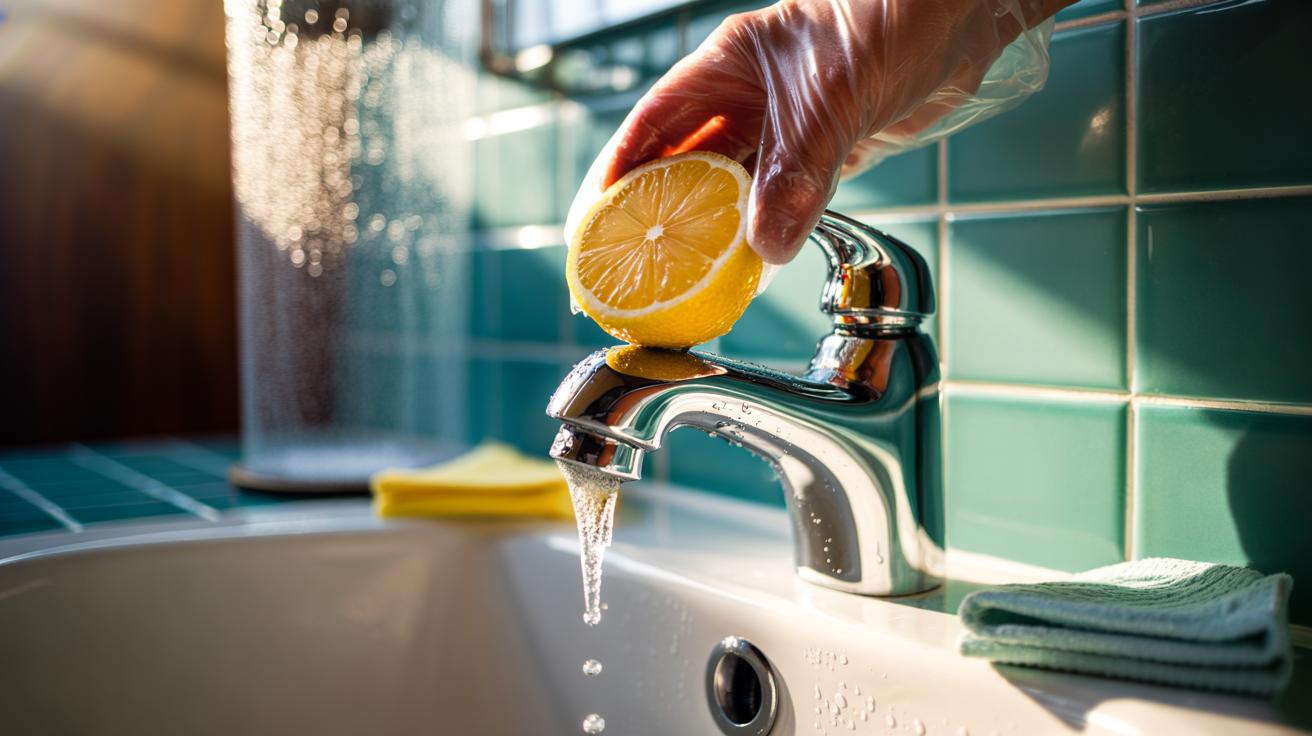
| Chrome taps | Rub with half lemon or lemon-soaked cloth | 3–5 minutes | Rinse, buff with dry microfibre |
| Shower glass | Spritz lemon juice; press cloth over; cling film if needed | 5–10 minutes | Squeegee, then buff edges |
| Stainless sink | Lemon juice; optional tiny pinch of salt | 2–4 minutes | Rinse well, dry to prevent spots |
| Ceramic tiles/grout | Brush lemon into lines with soft toothbrush | 4–6 minutes | Rinse and pat dry |
| Kettle interior | Lemon slices + water; simmer briefly | 5-minute simmer + 10-minute soak | Rinse twice, boil fresh water |
Speed Hacks and Smart Variations
Time is the secret weapon. Warm lemon works faster, so zap halves for 10 seconds or roll them hard on the worktop. To keep juice on vertical surfaces, soak a cloth and press it into place, then cover with cling film to slow evaporation. A drop of washing-up liquid in lemon juice improves glide on greasy marks, helping the acid reach the mineral. For spot-cleaning taps, rub with a spent lemon wedge from the chopping board; kitchen thrift meets bathroom shine. Small, frequent touch-ups stop big build-ups.
Choose your tools. Microfibre traps loosened minerals; a non-scratch pad handles corners; a soft toothbrush cleans around tap bases. Wear gloves if you have sensitive skin. Ventilate small bathrooms. Never mix acids with bleach or strong alkalis—that’s unsafe and counterproductive. If deposits persist, repeat a short application rather than extending one long, harsh soak. On tinted or coated glass, test a discreet patch. Where water is extremely hard, keep a pre-mixed lemon spray (one part juice to one part water) for quick daily spritzes. A minute here, a minute there, and scale never gets a foothold.
Prevention and Aftercare
Fresh shine is fragile if water keeps drying on the surface. Build a ritual. After showers, run a squeegee down the screen and tiles. Wipe tap spouts after you wash hands. It takes seconds and prevents the chalky outline from forming. Keep a dry cloth near sinks for quick buffs. Consider a showerhead filter or a whole-house softener in very hard-water postcodes; the former is affordable, the latter is transformative. Prevention costs less time than cure. A monthly deep lemon clean then becomes maintenance, not rescue.
Protection helps. On glass, apply a water-repellent coating designed for bathrooms; droplets bead and slide, which slows limescale. On stainless steel, a tiny dab of food-safe oil buffed thinly can deter spots. Always rinse away lemon residue fully; leftover acid can dull finishes. For grout, seal annually so minerals can’t bed in. Store two cloths: one for wet work, one strictly for drying. Label them if needed. With a few habits and the Lemon Spark method, you’ll spend less time scrubbing and more time admiring a believable, streak-free shine.
Lemon turns a tedious chore into a quick win: a bright scent, a faint fizz, and surfaces that gleam. The science is simple, the kit list tiny, and the payoff immediate. Apply, wait briefly, wipe, rinse, dry—done. For UK homes battling mineral-rich water, it’s a wallet-friendly, low-tox solution that genuinely works. Keep lemons on hand, a microfibre by the sink, and a squeegee in the shower, and those “impossible” marks stop being inevitable. What surface in your home would you put to the Lemon Spark test first, and what result would delight you most?
Did you like it?4.5/5 (28)