In a nutshell
- ⏱️ Act within the 10-second window: salt’s hygroscopic pull wicks liquid up fast, limiting dye and tannin penetration into carpet fibres.
- 🧽 Method that works: Blot, don’t rub → bury in table salt → wait a few minutes → lift and vacuum → light rinse (cold water, dilute vinegar, or pH‑neutral detergent), then dry.
- 🍷 Use vs. avoid: great for fresh, watery spills—red wine, tea, coffee, juice, beer; avoid for grease/oil, wax, paint, old stains; for pet urine, follow with an enzyme cleaner.
- 🧰 Keep a spill kit: shaker of salt, white cloths, spoon, paper towels, handheld vacuum; apply enough to fully cover damp sheen—coverage over measurement—and keep foot traffic off.
- 🛡️ Aftercare and prevention: speed-dry, vacuum to lift pile, consider a fabric protector, maintain weekly vacuuming, and stop if colour keeps transferring—then call a pro.
Spilled red wine. Spattered tea. A child’s juice misadventure. In the panic that follows, seconds matter, because liquids begin bonding with carpet fibres almost immediately. The simplest counterstrike sits in your cupboard: ordinary table salt. Used fast and correctly, it can stop a mark from setting before it becomes a permanent reminder of a bad night. This isn’t a miracle cure for every mess, but it’s a brilliant triage tool that buys time for proper cleaning. Act within ten seconds and you dramatically cut the risk of staining. Here’s the science, the method, and the limits—told plainly, so you can act with confidence when drama strikes underfoot.
Why Salt Works in a Flash
Salt is intensely hygroscopic. That means it grabs water molecules and holds them tight, exploiting capillary action to wick liquid away from fibres and towards the salt crystals sitting on top. When a spill hits carpet, it rushes down the pile and spreads out. You need a fast, passive barrier that prevents penetration while you organise a deeper clean. Enter a heavy sprinkle of dry, white salt. It buys precious minutes by stopping the liquid from migrating and locking pigments in place. That’s crucial with tannins in tea and wine, or the urea in pet accidents, which can etch in as they dry.
On synthetic carpets (nylon, polypropylene), salt primarily manages moisture and pigment, making follow-up cleaning easier. On wool, which is naturally absorbent and protein-based, the quick salt cover prevents swelling and dye uptake, reducing felting and colour distortion. It’s not a solvent. It won’t dissolve grease or oil. But with watery, dye-heavy culprits—think cordial, lager, fresh coffee—salt is a tactical first responder. The catch? Timing. Delay, and the salt simply sits on a stain that has already set.
The 10-Second Method: Step-by-Step
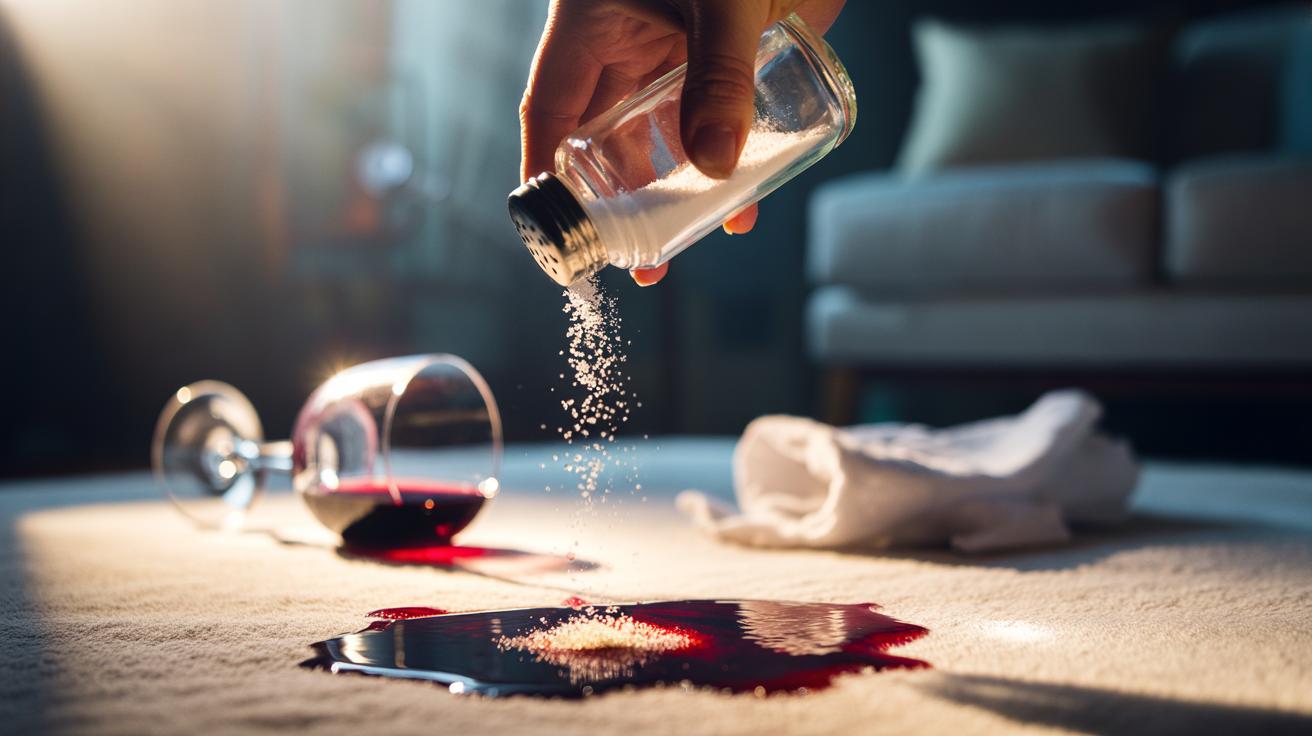
Move fast, but stay calm. First, blot. Use a clean white cloth or paper towel to dab the spill, lifting as much as you can without pushing liquid deeper. Do not rub—rubbing drives pigments into the pile. The aim is to reduce the load before the absorbent takes over. Now, rain on the salt. Pour a generous mound of plain white table salt directly over the damp patch until it’s hidden. Ten seconds from spill to salt is your golden window.
Let the salt work for several minutes as it turns pink with wine or tan with tea, visibly drawing liquid away. Gently lift the crusted salt with a spoon and discard. Vacuum the remaining grains thoroughly. Follow up with a light clean: for most drinks, blot with cold water; for wine or tea, a 1:5 mix of white vinegar to water can help; for milk-based spills, use a tiny amount of pH-neutral carpet detergent. Rinse by blotting with water, then dry with layered towels under a heavy book. Always patch-test any solution on a hidden corner first. If colour transfer continues, stop and consult a pro—overworking can set stains.
When to Use Salt—and When Not To
Salt excels with fresh, watery, tannin– or dye-based spills: red wine, rosé, cider, fruit juice, tea, black coffee, beer, and many pet accidents (immediate only). It’s also helpful on muddy splashes if you catch them while wet, limiting the spread. Think of salt as a quick dam that stops the river before it floods the backing. By wicking out moisture, it reduces ring formation and saves you from aggressive scrubbing later.
Salt is not a cure-all. Skip it for grease and oil (gravy, butter, lipstick), candle wax, paint, nail varnish, or old, dried stains—these require solvents or heat/ice methods. On delicate, richly dyed wool or dark carpets, watch for white haloing from overuse; vacuum thoroughly and don’t grind salt into the fibres. Pet urine older than a few minutes can require enzymatic cleaners to break down odours. If you suspect bleeding dyes on a handmade rug, avoid any wetting and call a specialist. When in doubt, treat with salt only as a stopgap, then escalate carefully.
Tools, Ratios, and Quick Reference
Keep a small “spill kit” near living spaces: a shaker of white table salt, two white cotton cloths, a spoon, paper towels, and a handheld vacuum. Quantity is guided by coverage: apply enough salt to conceal the damp sheen entirely. As a rough cue, a palm-sized splash needs one to two heaped tablespoons; a wine-glass topple might need much more. Coverage matters more than measurement. Blot, salt, wait several minutes, lift, vacuum, then perform a light, targeted clean.
| Spill Type | Immediate Action | Salt Amount | Wait Time | Note |
|---|---|---|---|---|
| Red wine | Blot, cover with salt | Fully cover | 3–10 mins | Follow with dilute vinegar rinse |
| Tea/coffee (black) | Blot, salt | Generous layer | 5–10 mins | Cold water blot after |
| Fruit juice | Blot, salt | Fully cover | 5–10 mins | Neutral detergent if sticky |
| Pet urine (fresh) | Blot, salt | Thick layer | 5 mins | Use enzyme cleaner later |
| Grease/gravy | Avoid salt | — | — | Use grease-specific method |
Keep traffic off the area. Open windows or aim a fan to speed drying. Dry fibres resist re-soiling; damp ones attract it.
Aftercare and Long-Term Protection
Once the emergency is contained, think longevity. Finish with a smart clean tailored to the spill: pH-neutral for general spills, enzyme for pet accidents, cold water for blood, tannin remover for tea. Always blot, never scrub. Scrubbing twists yarns, creates fuzzing, and makes stains look worse even when they’re cleaner. Speed-dry with layered towels and a weighted book, then vacuum to lift the pile. A weekly vacuum schedule reduces grit that amplifies staining by abrading fibres.
Consider a professional-grade fabric protector if your household is busy with kids, pets, or parties. It won’t make carpet bulletproof, but it buys reaction time—the currency of clean floors. Store salt and cloths where you spill most: beside the wine rack, near the sofa, under the stairs. Photograph tricky stains before and after; pros appreciate a timeline if you need help. Finally, know the limits: if colour keeps transferring to your cloth after several blots, stop. Timely restraint can prevent a salvageable mishap becoming a permanent scar.
Salt won’t replace a cleaner’s toolkit, yet its speed and simplicity make it a first-class ally against fresh, watery spills. The ten-second habit—blot, bury in salt, breathe—can turn chaos into control, then set you up for a calm, thorough finish. Your carpet keeps its dignity. Your evening is saved. The only question is readiness: will you keep a shaker to hand and train the household to use it within those vital ten seconds, or wait and hope for the best?
Did you like it?4.5/5 (26)