In a nutshell
- 🌀 Use the Vinegar Whirlpool method: pour boiling water, add baking soda, then swirl in vinegar, cap for 60 seconds, and flush—an efficient 2-minute fix.
- 🚿 Typical clogs come from FOG (fat, oil, grease), hair, soap scum and limescale, with the P-trap acting as a debris choke point and biofilms causing odours.
- 🔬 The chemistry works as acetic acid reacts with sodium bicarbonate to release CO₂ that agitates blockages, while the whirlpool’s shear helps lift debris—gentler than caustic cleaners.
- 🧰 Know when to escalate: repeated slow drains, cross-fixture backups, strong sewer smells, or suspected line damage mean it’s time to call a plumber for rodding, jetting, or a camera inspection.
- 🛡️ Prevent clogs with drain strainers, binning FOG, weekly hot-water flushes, monthly enzyme treatments, and periodic vinegar soaks—plus early action at the first gurgle.
Blocked sink? No one has time for that. The Vinegar Whirlpool offers a quick, low-cost way to dislodge minor clogs using items already in your kitchen. It’s simple chemistry guided by a little physics, and it’s surprisingly effective on early-stage blockages caused by grease, soap scum, and hair. The trick lies in how you pour and for how long you let the fizz work. Two minutes of hands-on effort. No harsh chemicals, no fuss. Do not try this if there’s bleach in the drain. Ready to clear your pipes and reclaim your sink?
What Causes the Blockage You Smell Before You See
Most domestic clogs start quietly. In kitchens, fat, oil and grease (FOG) cools on contact with the pipe walls, catching crumbs and coffee grounds. In bathrooms, hair tangles with soap scum to form stubborn mats. Add hard water—common across the UK—and you get limescale deposits that roughen the pipe’s interior, giving grime something to grip. The result is a sticky, layered blockage with a faint, sour odour long before water slows. Bacteria build biofilms on these deposits, intensifying smells.
Then there’s the plumbing itself. Your P-trap (the U-shaped bend under the sink) is designed to hold water and block sewer gas. It also holds debris. As residues accumulate on the inside curve, the channel narrows, which makes more solids snag there. A perfect choke point. If you ignore that early gurgle, the clog hardens, making any quick fix less likely to succeed. That’s why a swift intervention with a targeted method matters.
The “whirlpool” element is not a gimmick. By pouring in a circular motion to create angular momentum, you drive the liquid down the centre while shearing along the pipe wall. That shear helps lift the loosened scum and carry it through the trap. It’s a brief mechanical advantage, but in a small-bore domestic waste line, it counts.
The Two-Minute Vinegar Whirlpool Method
Active time is short. Results are immediate for light clogs. Gather what you need and move quickly.
| Item | Amount | Role | Timing |
|---|---|---|---|
| Boiling water | 1–1.5 litres | Softens FOG; initial flush | 10–15 seconds |
| Baking soda (sodium bicarbonate) | 80–100 g (~1/2 cup) | Reacts to create agitation | 10 seconds |
| White vinegar (acetic acid 5–8%) | 200–250 ml (~1 cup) | Dissolves scum; fuels fizz | 60–90 seconds |
| Drain plug or cloth | — | Directs reaction downward | 60 seconds |
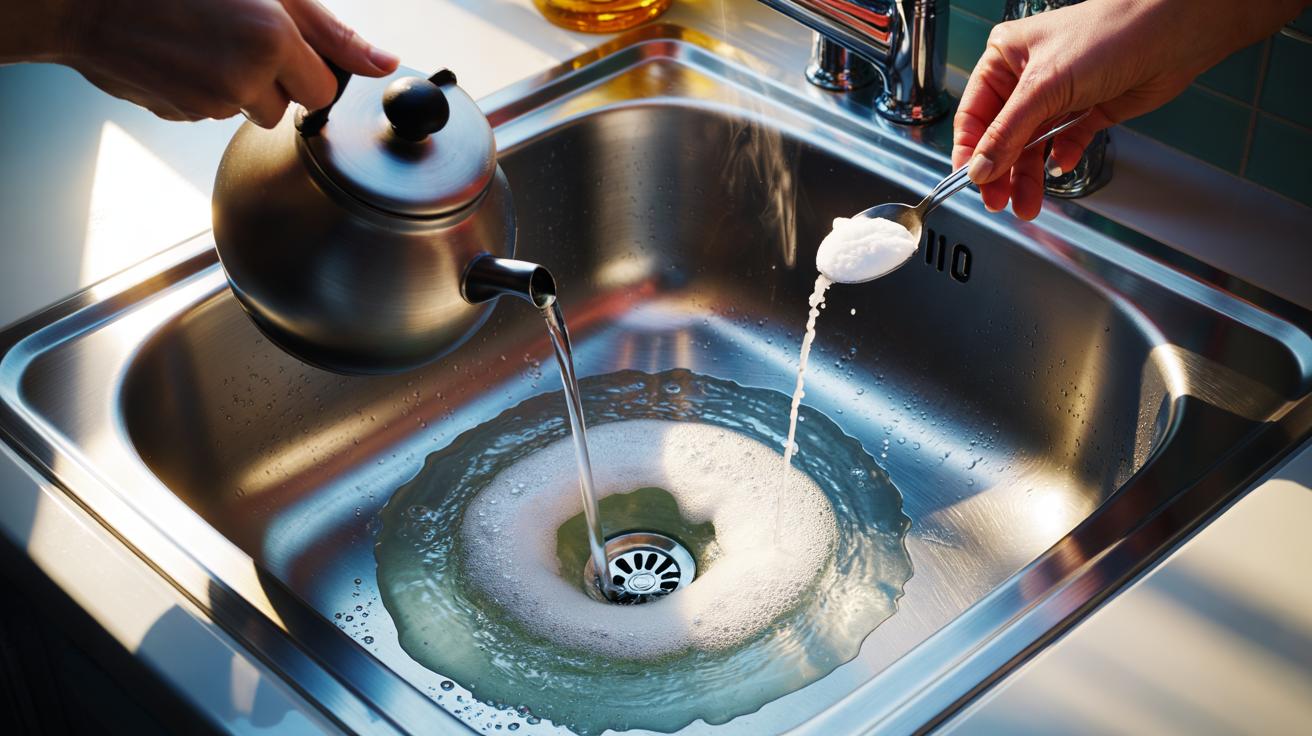
Step 1: Remove any standing water with a jug. Pour a full kettle of boiling water straight down the drain. This softens grease and wakes the blockage. Step 2: Tip in the baking soda. Get it as deep as you can. Step 3: Pour vinegar in a steady circle to create the whirlpool, then immediately cap the drain with a plug or scrunched cloth. Listen to the fizz. That sound is your scrubbing action. Wait one minute.
Step 4: Uncap. Finish with another kettle of hot (not boiling, if your pipes are plastic) water, poured again in a circular motion. The swirl carries loosened debris through the P-trap. If flow improves but isn’t perfect, repeat once. Never mix vinegar with bleach or proprietary drain cleaners—dangerous fumes can result. This routine clears minor clogs fast; for solid obstructions, it’s a diagnostic test that tells you a mechanical clean may be needed.
Why the Chemistry Works
At its heart, this method uses gentle acid and fast gas to nudge a blockage apart. Acetic acid in vinegar reacts with sodium bicarbonate to form sodium acetate, water and carbon dioxide gas. That CO₂ isn’t just fizz for show; it agitates. Bubbles expand into crevices within the clog, lifting particles and breaking weak bonds in the scum layer. Think of it as micro-scrubbing where brushes can’t reach.
Vinegar does a second job. It helps dissolve limescale (calcium carbonate) and some soap residues, especially where hard water has left a crusty film. It’s not instant, but even a brief soak softens the matrix that traps hair and grease. The initial boiling water phase primes the drain by warming and loosening FOG, so the reaction can get deeper rather than stalling at the grate.
The “whirlpool” component adds physics to chemistry. By swirling the pour, you create shear along the pipe wall and a coherent core flow that drags loosened debris forward. In narrow waste pipes, that shear can be the difference between fizzing in place and actually transporting the mess past the bend. This is a gentle method, but it’s targeted and surprisingly forceful where it matters. It’s also kinder to seals and finishes than caustic cleaners, which can etch metal and degrade rubber over time.
When to Call a Plumber and Preventive Habits
Sometimes a quick fix isn’t enough. Persistent slow drainage, water backing up in an adjacent fixture (the bath gurgling when you run the sink), foul sewage smells from floor drains, or repeated clogs within days signal a deeper issue. Tree roots in outside pipework, a collapsed section, or a fatberg in the stack won’t yield to kitchen chemistry. If water is overflowing elsewhere or you suspect a mains blockage, stop and seek professional help. A qualified plumber can rod, jet, or camera-inspect the line and fix what DIY can’t touch.
Prevention is mercifully simple. Fit a drain strainer in sinks and showers to catch hair and food scraps. Avoid tipping FOG down the sink; wipe pans with kitchen roll and bin it. Once a week, send a kettle of hot water down the drain. Once a month, use an enzyme-based cleaner overnight to digest residues without harsh chemicals. If you live in a hard water area, a periodic vinegar soak can soften scaly build-up at the mouth of the waste and around stoppers. Small habits, big gains.
Also, listen to your plumbing. A new gurgle, a lingering odour, or the need for frequent “quick fixes” suggests a partial blockage building out of sight. Address it early. Keep the Vinegar Whirlpool as a first response, not a last resort, and you’ll save time, money and stress.
The Vinegar Whirlpool turns household staples into a nimble, two-minute response that frees small clogs and freshens drains without harsh chemicals. It blends gentle chemistry with a smart pour, giving you a rapid win before minor annoyances escalate into weekend-wrecking emergencies. Use it as part of a simple routine and you’ll keep water moving, odours down, and pipes happier for longer. When it struggles, that’s your cue to escalate promptly. Ready to try the whirl, reclaim your sink, and make drain care a habit—what will your two-minute maintenance routine look like this week?
Did you like it?4.4/5 (20)