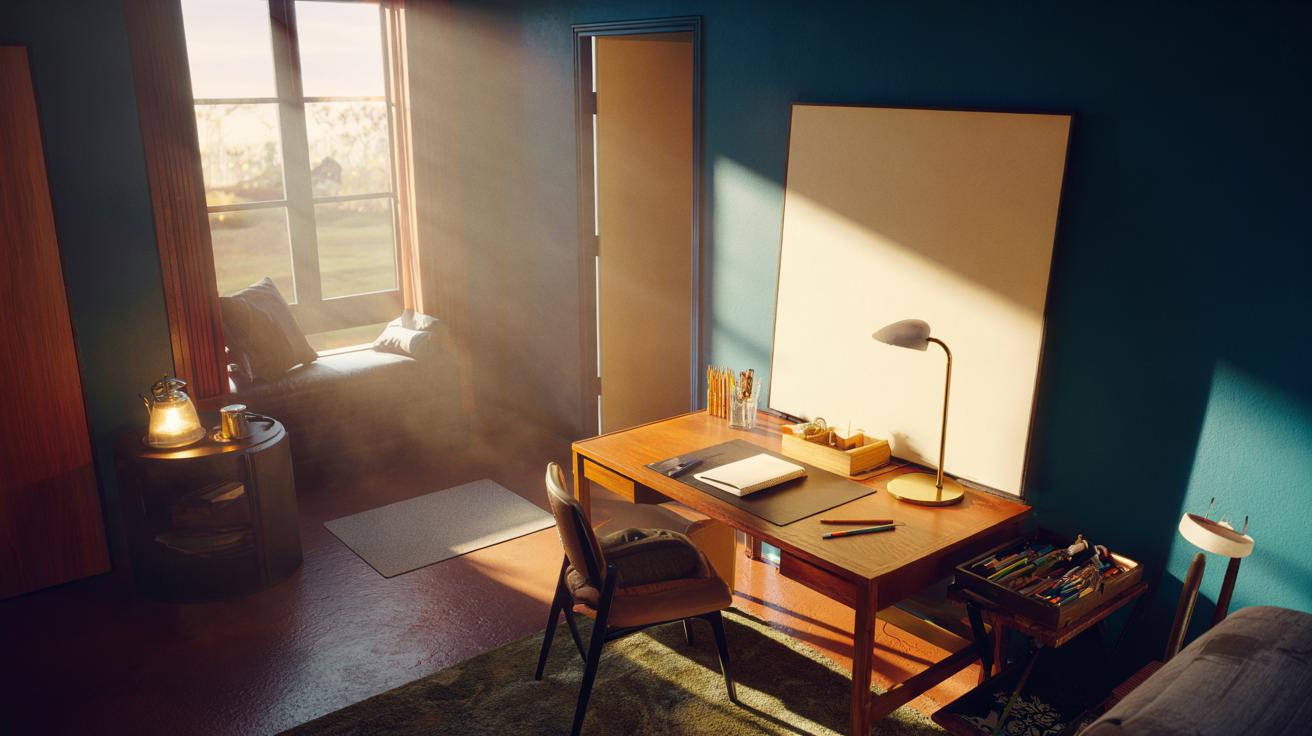
In a nutshell
- 🔑 The memory anchoring trick uses context-dependent memory to rewire habits: change your layout, change your cues, unlock hidden motivation.
- 🧠 Space shapes behaviour via embodied cognition: light, posture, and object placement steer attention, turning desired actions into the effortless default.
- 🛠️ Practical method: pick one goal, create a dedicated anchor zone, adjust a sensory element (light/texture/scent), add a 90-second reset ritual, and name the space to cement the cue.
- 📊 Clear examples show impact: desk-to-wall for reduced visual noise, chair-by-window for natural light focus, door-side mat as a threshold ritual, and a kettle tray to prompt “tea then tasks.”
- ⚠️ Avoid over-design and clutter; use portable anchors, define micro-territories, rely on a single focus playlist, and pair zones with implementation intentions and two-minute starters to sustain momentum.
We love to blame willpower, but our rooms are often the true saboteurs. Shift a chair, move a lamp, and suddenly the mind stirs. This is the memory anchoring trick: leveraging the brain’s sensitivity to context so a changed layout nudges fresh habits and ambition. It’s not feng shui cosplay; it’s behavioural design with a British sensibility and a practical budget. When the environment changes, the story you tell yourself can change too. And when your story changes, you do. Rearranging furniture sounds quaint. In practice, it can be a fast route to hidden motivation, especially when home, work, and rest blur together.
Why Space Shapes Your Drive
Psychologists call it context-dependent memory. Our brains tag information to places, smells, and layouts; recall is boosted when cues match the original learning context. If your sofa equals Netflix, it will also equal procrastination. Alter the room and you alter the cues. Physical context acts like a steering wheel for attention. That’s why a simple desk rotation can feel like a reset button. It breaks stale habit loops by disrupting automatic routes through a room and forcing conscious engagement with your goal.
There’s also embodied cognition: posture, reach, and eye-line influence thought. Place your reading chair near natural light and your spine naturally settles into focus; stack a yoga mat within arm’s reach and stretching stops being a decision and starts being the default. Even subtle cue-dependent recall matters—pencils in a pot can remind you of sketching, a kettle on a tray can whisper “tea then write”. Motivation is often a memory, triggered by the scenery. Change the scenery, and dormant intentions reappear with surprising clarity.
The Memory Anchoring Trick, Step by Step
First, pick one clear goal: read nightly, ship a side project, restart fitness. Then create a dedicated “anchor” zone, no matter how small. Angle a table towards a blank wall to delete visual distractions. Move the chair so your body faces the task. Add a single-purpose tool within reach—journal, resistance band, manuscript printout. Make the right action the easy action. Label the area in your head: “Focus Nook”, “Stretch Spot”, “Pitch Bench”. Names help cement the cue.
Next, change one sensory dimension: light, texture, or scent. A warm bulb for reading, a harsher task lamp for spreadsheets, a different rug underfoot to mark the productivity patch. Consider a micro-threshold: a small mat you step onto to start work. Add a reset ritual of 90 seconds—wipe desk, close tabs, set timer—so the environment returns to baseline each day. If the home is shared, use a portable caddy to pack tools away swiftly. Consistency beats grandeur; minor moves done daily compound. When novelty fades, rotate an item and refresh your anchor without rewriting the entire room.
| Room Change | Psychological Anchor | Use Case | Expected Effect |
|---|---|---|---|
| Desk facing wall | Reduced visual noise | Deep writing | Longer focus blocks |
| Chair by window | Natural light cue | Reading, planning | Calmer attention |
| Mat near door | Threshold ritual | Quick workouts | Faster start-up |
| Tray with kettle | Implementation prompt | Tea then tasks | Reliable routine |
Evidence From Psychology and Everyday Case Studies
Classic studies on context-dependent memory—from divers recalling words underwater to students remembering details in familiar rooms—show that recall rides on surroundings. Habit research (think Wood et al.) finds that environmental stability cements routines; change the context and you loosen old patterns. That’s your opportunity. The so-called doorway effect hints at how boundaries reset mental files. A room layout tweak is a doorway you design.
A London illustrator, stuck in dithering, flipped her desk to face a blank wall, added a pinboard of reference images, and banned chargers from sight. Within a week, her morning output doubled. A Manchester nurse training for exams created a “revision ledge” on the kitchen counter, using a bar stool and a clip-on lamp. Short, intense sessions while the pasta boiled replaced wandering study marathons. A sixth-former in Bristol placed his guitar stand next to the bed and moved the game console to a cupboard; practice time surged. Small moves, outsized momentum. The common thread: purpose-built cues that made the desired action obvious and immediate.
Common Pitfalls and How to Fix Them
Over-design kills use. If your setup requires a ten-minute construction ritual, you won’t start. Keep anchors lightweight and reversible. Clutter is another saboteur; piles become noise, noise becomes avoidance. Use one tray per zone and a strict one-in, one-out rule. When novelty fades, schedule a monthly “five-minute shuffle”: swap lamp sides, rotate a chair, refresh a wall image. Novelty sustains attention; rhythm sustains behaviour.
Multi-purpose rooms are tricky. Define micro-territories by texture: a different rug, a folding screen, even painter’s tape to outline a workout square. For renters or housemates, think portable anchors—wheeled carts, foldable tables, magnetic lights—that leave no marks and move out of the way. If family noise intrudes, shift anchors from visual to auditory: noise-cancelling headphones, a single focus playlist that acts as a mental door. And when procrastination returns, don’t escalate furniture; shrink the task. Two-minute starters, then a timer. Pair with implementation intentions—“After tea, I sit at the window chair and read five pages”—so the anchor meets a plan.
Rearranging furniture won’t change your life on its own, but it can change what your life makes obvious. That’s the power of memory anchoring: edit your surroundings, and the brain edits your priorities. Start small. Move one chair, repoint one lamp, name one corner. Then watch what becomes effortless and what still resists. The right room shape makes the right choice feel natural. If you tried this tonight, which single, specific shift would cue tomorrow’s best effort—and what would you remove to make that cue impossible to ignore?
Did you like it?4.5/5 (24)